




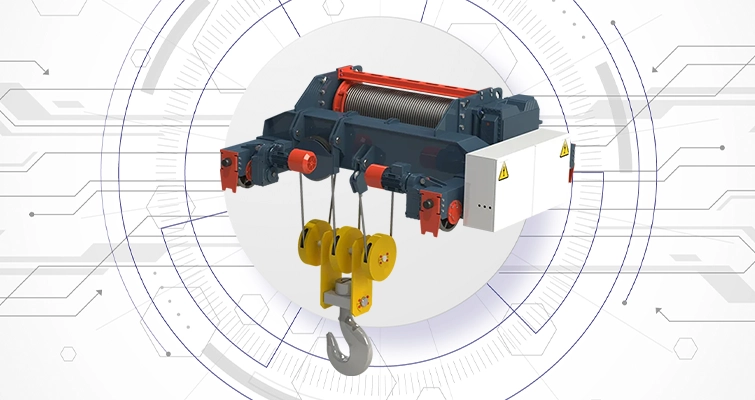
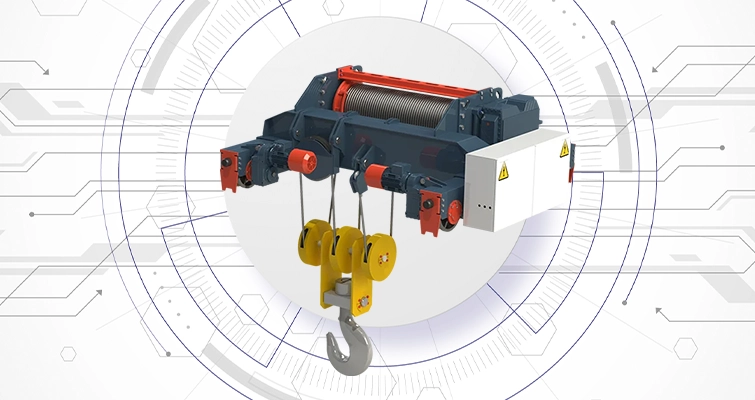
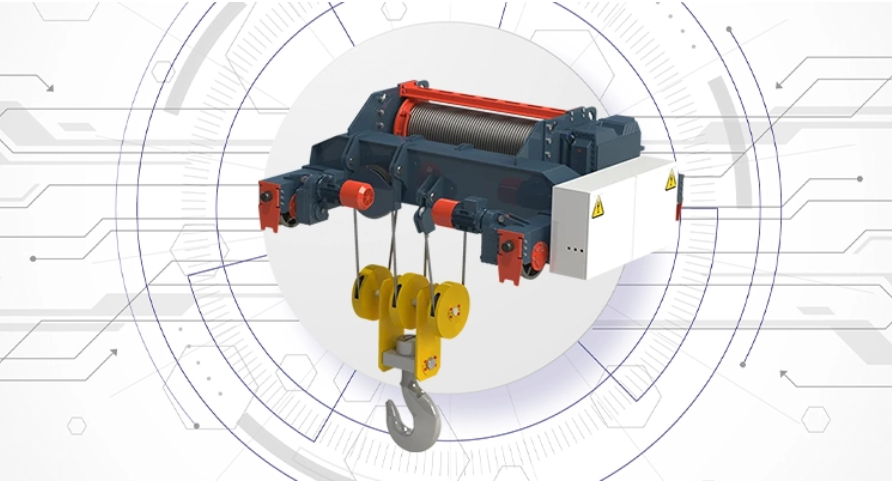
What Is a Crane Travelling Unit?
What Is a Crane Travelling Unit?
In industrial crane systems, lifting the load is only one part of the operation. The lifted load must also be moved safely, smoothly and accurately across the working area.
One of the main systems responsible for this horizontal movement is the crane travelling unit.
A crane travelling unit is a mechanical and electromechanical system that enables the crane bridge, trolley or another moving crane component to travel forward and backward along a rail system.
It is used in a wide range of industrial lifting systems, including:
Overhead bridge cranes
Gantry cranes
Monorail systems
Process cranes
Custom industrial crane systems
In simple terms:
The hoisting unit moves the load up and down, while the travelling unit moves the crane horizontally.
For this reason, an overhead crane cannot be evaluated only according to lifting capacity.
The crane must also be able to move smoothly, safely and at the correct speed across the production area.
The technical configuration of a travelling system is influenced by:
Total crane weight
Lifted load
Crane span
Wheel loads
Travelling speed
Rail system
Daily operating intensity
Braking requirements
Motor and gearbox characteristics
Therefore, the travelling unit should not be considered a secondary crane component.
It is one of the main mechanisms that determines crane movement quality, production efficiency and long-term mechanical performance.
How Does a Crane Travelling System Work?
For an industrial crane to move along its runway, rotational force generated by an electric motor must be transferred to the crane wheels.
In a typical configuration, the motor generates rotational movement.
The gearbox then converts this movement into the required combination of lower speed and higher torque.
This torque is transferred to the wheel groups, allowing the crane to move along the rail.
Depending on the crane design, different mechanical configurations can be used.
A crane travelling unit may include:
Electric motors
Gearboxes
Crane wheels
Wheel blocks
Drive mechanisms
Brake systems
Couplings
Shafts
Electrical equipment
Frequency inverters
Speed control systems
Limit switches
Positioning equipment
Each of these components has a direct impact on travelling performance.
For example, even if the selected motor has sufficient power, the system may not perform correctly if the wheel diameter, rail profile or gearbox ratio is unsuitable.
For this reason, the complete travelling mechanism should be engineered as an integrated system.
How Many Main Movements Does an Overhead Crane Have?
Understanding the main axes of movement helps explain how an overhead bridge crane operates.
A typical overhead crane has three fundamental movements.
1. Hoisting Movement
This is the vertical movement of the hook and suspended load.
It is performed by the hoisting unit.
2. Cross Travelling Movement
This is the horizontal movement of the hoist or crane trolley across the bridge.
It allows the hook to reach different positions along the crane bridge.
3. Long Travelling Movement
This is the movement of the complete crane bridge along the factory runway.
When these three movements work together, the load can be transferred between different points within the crane's working area.
Therefore, crane performance should not be evaluated only through the hoisting mechanism.
Hoisting, cross travelling and long travelling must be considered together.
What Is a Bridge Travelling Unit?
The bridge travelling unit enables the main bridge structure of an overhead crane to move along the length of the factory.
Crane wheels are located in the end carriage groups on both sides of the bridge and run on crane rails.
Motor-gearbox systems drive the wheels, allowing the entire crane bridge to travel forward and backward.
Correct travelling unit design is particularly important for:
Wide-span cranes
High-capacity cranes
Heavy-duty industrial systems
High-frequency operations
Both sides of the bridge must travel in a coordinated manner.
Irregular movement may lead to:
Wheel wear
Rail wear
Vibration
Excessive noise
Mechanical stress
Crane skewing
Increased load on drive systems
Therefore, wheel geometry, rail alignment, motor characteristics and drive control should be evaluated together.
What Is a Crane Wheel Group?
Crane wheels are mechanical components that enable the bridge or trolley to move along the rail system.
In industrial applications, crane wheels are frequently exposed to high static and dynamic loads.
Particularly in high-capacity overhead cranes, wheel loads are not determined only by the lifted load.
The total load may include:
Bridge structure
Hoisting unit
Crane trolley
Electrical equipment
Suspended load
Below-the-hook lifting equipment
For this reason, crane wheels should not be selected only according to the nominal lifting capacity of the crane.
Individual wheel loads should be determined through engineering calculations.
How Is Crane Wheel Diameter Determined?
Crane wheel diameter is an important design parameter within the travelling system.
Factors affecting wheel diameter may include:
Load per wheel
Rail dimensions
Crane capacity
Travelling speed
Duty classification
Daily operating hours
Wheel material
Mechanical design
If the wheel diameter is too small or not appropriate for the application, contact stresses may increase.
Similarly, incompatibility between rail and wheel geometry can accelerate wear.
For this reason, crane rails and crane wheels should always be considered as parts of the same mechanical system.
What Is a Crane Rail System?
A crane rail provides the controlled travelling path for the crane.
In overhead bridge cranes, the main crane runway rails extend along the factory, while the crane trolley travels along the bridge structure.
In gantry cranes, the rail system is generally installed at floor level or on a purpose-built supporting structure.
Correct crane rail installation is extremely important for travelling performance.
Potential problems include:
Elevation differences
Incorrect rail gauge
Misalignment
Poor connections
Uneven rail surfaces
These issues can cause irregular wheel movement.
They may also negatively affect the service life of wheels and other mechanical components.
Why Is Crane Rail Alignment Important?
Even high-quality crane wheels and motors cannot deliver the expected performance if the rail system is incorrectly aligned.
The rails should be installed parallel to one another and within the required tolerances.
The supporting structure must also be properly prepared.
Incorrect rail alignment may result in:
Crane pulling to one side
Uneven wheel wear
Rail side wear
Increased motor load
Higher energy consumption
Excessive noise
Vibration
Crane skewing
Therefore, when installing a new crane in an existing factory, both crane manufacturing and runway alignment should be evaluated technically.
What Is a Crane Motor-Gearbox Unit?
The motor and gearbox generate and transfer the mechanical movement required by the crane travelling system.
The electric motor produces high-speed rotational movement.
The gearbox converts this rotation into the lower speed and higher torque required by the travelling mechanism.
When selecting a motor-gearbox configuration, several parameters should be considered:
Total moving weight
Required travelling speed
Wheel diameter
Acceleration time
Duty class
Frequency of operation
Mechanical resistance
Travel conditions
For this reason, questions such as:
“What crane tonnage is suitable for a 5 kW motor?”
cannot always be answered accurately using a single parameter.
Motor power should be determined according to the entire mechanical system.
What Should Crane Travelling Speed Be?
Correct travelling speed is important for balancing production efficiency with load control.
In long production facilities, loads may need to be moved quickly from one point to another.
However, in precision assembly operations, excessively high travelling speed can make load positioning more difficult.
The following factors should be considered:
Factory length
Production speed
Type of load
Number of operations
Positioning requirements
Load swing
Operator control requirements
Modern crane systems may use:
Single-speed control
Dual-speed control
Variable-speed inverter control
instead of relying on one fixed travelling speed.
What Is an Inverter-Controlled Crane Travelling System?
A frequency inverter, also known as a variable frequency drive, is an electronic system used to control electric motor speed.
In crane travelling applications, an inverter can allow the motor to accelerate gradually instead of immediately reaching full speed.
Similarly, the crane can decelerate more smoothly before stopping.
Depending on the application, variable-frequency travelling control may provide:
Smooth acceleration
Smooth deceleration
Precise movement
Controlled speed changes
Reduced load swing
Reduced mechanical shock
Improved operator control
This can be especially useful in production facilities with frequent start-stop cycles.
Why Is Smooth Crane Acceleration Important?
When a high-capacity crane begins travelling suddenly, dynamic forces can be generated in both the crane structure and suspended load.
The suspended load may begin swinging, making precise positioning more difficult.
Controlled acceleration allows the travelling system to build speed more gradually.
This is particularly important when handling:
Long suspended loads
Large steel structures
Machinery
Production molds
Sensitive equipment
Precision assembly components
What Is a Single Girder Travelling Unit?
Travelling units for single girder overhead cranes are designed according to crane capacity, bridge span and structural configuration.
End carriage assemblies are installed at the ends of the main bridge girder.
Crane wheels mounted in these end carriages allow the crane to travel along the runway rails.
Single girder crane systems are widely used in:
Manufacturing plants
Workshops
Warehouses
Machinery factories
Assembly facilities
The correct travelling system should be selected according to:
Capacity
Span
Travel distance
Operating intensity
Travelling speed
Duty class
What Is a Double Girder Travelling Unit?
Double girder overhead cranes are commonly selected for applications requiring:
Higher lifting capacities
Wider spans
Higher operating intensity
Heavy-duty service
Because the total bridge weight and wheel loads may be significantly greater, the travelling system becomes even more important.
The following parameters should be evaluated in detail:
Wheel loads
Motor power
Gearbox ratio
Braking
Rail selection
Acceleration
Synchronized travelling
Duty classification
How Does a Gantry Crane Travelling Unit Work?
Gantry cranes use supporting legs that extend from the crane bridge down to the ground.
For this reason, the complete gantry structure must travel along the runway.
The travelling unit of an outdoor gantry crane may be exposed to environmental conditions such as:
Wind
Rain
Snow
Dust
Temperature changes
Contaminated rail surfaces
Therefore, gantry crane travelling systems should be selected according to both lifting requirements and outdoor operating conditions.
What Is a Monorail Trolley Travelling System?
Monorail systems are used in facilities where loads need to follow a predefined route.
The hoist or trolley travels along a single beam or rail.
Monorail trolley systems can be used in:
Production lines
Paint shops
Assembly plants
Warehouses
Machine feeding areas
Material handling lines
One of the main advantages of a monorail system is that the travelling route can be designed according to the production process.
What Is the Difference Between a Hoisting Unit and a Travelling Unit?
These two systems are often confused in industrial crane terminology.
Hoisting unit:
Moves the load vertically.
Travelling unit:
Moves the crane bridge or trolley horizontally.
Without a hoisting unit, the load cannot be lifted.
Without a travelling unit, the lifted load cannot be transported to different parts of the working area.
Together, these systems create the main movement infrastructure of an industrial crane.
What Causes Crane Wheel Wear?
Crane wheels naturally experience wear over time.
However, excessive or uneven wear may indicate a technical problem.
Common causes may include:
Incorrect rail alignment
Wheel misalignment
Unsuitable wheel geometry
Uneven wheel loads
Bridge geometry problems
Frequent aggressive braking
Incorrect motor synchronization
Insufficient maintenance
Replacing the wheel alone may not permanently solve the problem if the underlying cause remains.
The source of abnormal wear should first be identified.
What Causes Crane Rail Wear?
Rail wear is also closely related to travelling system performance.
Continuous contact between the wheel flange and rail side, incorrect rail alignment or bridge skewing can cause localized wear.
Detecting these problems early can help prevent more extensive mechanical damage.
Periodic inspection should therefore include:
Wheel running surfaces
Wheel flanges
Rail heads
Rail sides
Connection points
Brake systems
Unusual movement patterns
How Should a Crane Travelling Unit Be Maintained?
The maintenance schedule should be developed according to crane usage intensity and the operating environment.
Periodic checks may include:
Crane wheels
Rail surfaces
Motor connections
Gearbox oil condition
Brake systems
Bolted connections
Electrical equipment
Inverter fault history
Limit switches
Unusual noise
Excessive vibration
The purpose of maintenance is not simply to replace failed components.
A more effective approach is to identify signs of wear before they develop into failures that interrupt production.
What Determines Crane Travelling Unit Prices?
Commercial searches frequently include terms such as:
crane travelling unit price
crane wheel group price
crane motor gearbox price
overhead crane travelling system
crane wheel price
crane drive unit
However, travelling systems are generally configured according to the individual crane project.
For this reason, there is no universal fixed price.
Important pricing parameters include:
Crane capacity
Bridge weight
Crane span
Number of wheels
Wheel diameter
Wheel material
Motor power
Gearbox type
Travelling speed
Inverter control
Brake system
Duty class
Rail system
Operating environment
Electrical and control equipment
Therefore, two overhead cranes with the same lifting capacity may require different travelling systems and have different costs.
Accurate pricing requires complete technical evaluation.
What Information Is Needed for a Travelling Unit Quotation?
Providing detailed project data helps improve the accuracy of engineering and quotation work.
Crane Capacity
How many tons will the crane lift?
Crane Span
What is the distance between the runway rails?
Total Crane Weight
What is the approximate total weight of the bridge, hoist and other equipment?
Travel Distance
How many meters will the crane travel along the facility?
Required Speed
Is high-speed, standard-speed or precision movement required?
Operating Intensity
How many hours and shifts per day will the crane operate?
Operating Environment
Will the crane be used indoors or outdoors?
Existing Rail System
Will the crane operate on an existing runway or will a new rail system be installed?
These parameters allow the travelling system to be engineered more accurately.
Can the Travelling Unit of an Existing Crane Be Replaced?
In some older cranes, the travelling system can be modernized.
Components that may be upgraded include:
Motors
Gearboxes
Brakes
Crane wheels
Inverters
Control systems
However, the complete existing crane should first be evaluated.
Important inspection points include:
Crane wheels
Rail system
Bridge geometry
End carriages
Motor-gearbox units
Electrical panel
Brake system
Control system
Replacing only one component may not solve the original problem if the cause is located elsewhere in the travelling system.
For this reason, crane modernization should be approached as a complete system evaluation.
New Crane or Travelling System Modernization?
A crane experiencing travelling problems does not automatically need to be replaced.
In some cases, upgrading the travelling system may be technically and economically reasonable.
However, a new crane investment may be more appropriate if:
The bridge structure is inadequate
Required lifting capacity has increased significantly
The crane has reached the end of its economic service life
Most mechanical and electrical systems are obsolete
The crane no longer meets production requirements
The decision should be based on technical inspection and future production targets.
How Does the Travelling System Affect Production Efficiency?
Crane travelling performance can directly influence production cycle times.
If a lifted load takes too long to travel from one end of the production line to another, the complete process can slow down.
However, simply maximizing travelling speed is not always the correct solution.
The ideal crane travelling system should establish a balance between:
speed, precision, safety and mechanical durability.
In intensive production environments, optimizing the travelling system according to the actual production process can significantly improve long-term operational performance.
Crane Travelling Systems and Industrial Crane Solutions in Konya
Konya is one of Türkiye's major manufacturing centers, with strong industries including:
Machinery manufacturing
Steel fabrication
Automotive supply
Agricultural machinery
Metal processing
Heavy industry
This industrial infrastructure creates significant demand for high-capacity and high-duty crane systems.
EserVinç develops engineering-based solutions for:
Overhead bridge cranes
Gantry cranes
Jib cranes
Process cranes
Hoisting units
Travelling units
The correct travelling system should be selected not only according to lifting capacity but also based on:
Crane span
Wheel loads
Rail system
Travelling speed
Daily operating intensity
Environmental conditions
The objective is not simply to make the crane move along the rail.
The objective is to develop a controlled, reliable and production-oriented travelling system that matches the real operating conditions of the facility.
Frequently Asked Questions
What is a crane travelling unit?
A crane travelling unit is a mechanical and electromechanical system consisting of components such as motors, gearboxes, wheels and brakes that enable an overhead crane, gantry crane or trolley to move horizontally along a rail system.
What does a crane wheel group do?
The crane wheel group transfers the loads from the crane bridge or trolley to the rails and allows the system to travel along the runway.
Are bridge travelling and trolley travelling the same?
No. Bridge travelling moves the entire crane bridge along the factory, while trolley travelling moves the hoisting unit across the bridge.
Why do crane wheels wear?
Crane wheel wear can be affected by rail misalignment, wheel geometry, uneven wheel loading, bridge misalignment, aggressive braking and intensive use.
Why do crane rails wear?
Incorrect wheel contact, rail misalignment, excessive wheel loads, bridge skewing and long-term operation may cause rail wear.
How is a crane travelling motor selected?
Motor power should be calculated according to total moving weight, travelling speed, wheel diameter, acceleration time, mechanical resistance and duty classification.
Is inverter control necessary for crane travelling?
Inverter control can provide major advantages where smooth acceleration, controlled stopping, variable speed or precise movement are required. The need should be determined according to the production process.
How much does a crane travelling unit cost?
There is no universal price. Wheel quantity and diameter, motor-gearbox configuration, crane capacity, travelling speed, inverter system, brakes and duty classification are among the main cost factors.
Can an old crane travelling unit be modernized?
Depending on the technical condition, motors, gearboxes, wheels, brakes, drive systems and controls can be upgraded. The existing bridge and rail system should be inspected before modernization.
Engineer Your Crane Travelling System with EserVinç
Efficient crane travelling cannot be achieved by installing a powerful motor alone.
Wheel groups, motor-gearbox systems, brakes, crane rails, speed control, bridge geometry and duty classification should all be evaluated together.
From single girder overhead cranes and double girder systems to gantry cranes and monorail applications, every travelling system has different engineering requirements.
EserVinç evaluates crane travelling systems according to the actual operating conditions of the facility and develops solutions suited to lifting capacity, operating intensity, rail configuration and required movement characteristics.
For a new crane investment, travelling unit replacement, crane wheel group requirements, motor-gearbox modernization or a custom industrial crane project, contact EserVinç to request a technical evaluation and project quotation.
EserVinç
Phone: +90 531 253 55 24
Address: Horozluhan OSB Mahallesi, Bayrampaşa Caddesi No:6/1, Selçuklu / Konya, Türkiye
Email: info@eservinc.com