




What Is Crane Modernization?
What Is Crane Modernization?
Overhead bridge cranes, gantry cranes and other industrial lifting systems that have been operating in manufacturing facilities for many years may eventually fall behind the current mechanical, electrical and technological requirements of the business.
This does not always mean that the complete crane must be replaced.
If the existing load-bearing structure is technically suitable, the crane can often be upgraded by renewing components such as:
Motors
Gearboxes
Brakes
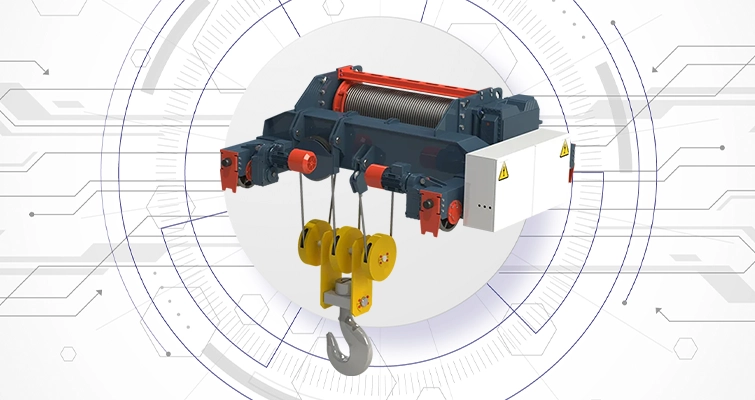
Hoisting units
Travelling systems
Electrical panels
Control systems
Safety equipment
This process is generally referred to as crane modernization or crane refurbishment.
The purpose of modernization is not simply to improve the appearance of an old crane.
The real objective is to:
Evaluate the existing technical condition
Redefine current operating requirements
Renew critical mechanical and electrical components
Improve safety performance
Improve motion control
Adapt the crane to the current production intensity
A correctly planned crane modernization project can be a more economical alternative to purchasing a completely new crane.
However, not every old crane is suitable for modernization.
In some cases, a new crane can become a safer, more economical and more sustainable investment.
Therefore, the real question should not be:
“Can this old crane be repaired?”
A better question is:
“When the remaining technical life, production requirements and modernization cost are compared with a new crane investment, which option creates the better long-term result?”
Why Do Factories Need Crane Modernization?
A crane may work on the same production line for many years.
However, the factory's operating conditions may change significantly over time.
A facility may begin to:
Manufacture heavier products
Increase the number of lifting cycles
Move from two shifts to three shifts
Require more precise load positioning
Demand additional safety systems
Replace pendant control with radio remote control
Experience repeated failures in old electrical equipment
All of these changes can affect whether the existing crane still matches the facility's current requirements.
For example, a crane originally designed to perform 20 lifting cycles per day may later be required to perform 150 cycles per day after production expansion.
The operating conditions are now very different from the original design basis.
At this point, maintenance and modernization should be treated as different concepts.
Maintenance aims to preserve the current technical condition of the system.
Modernization aims to improve the system or adapt it to new operating requirements.
What Is the Difference Between Crane Maintenance and Crane Modernization?
These two concepts are frequently confused in industrial facilities.
Periodic crane maintenance may include:
Lubrication
Brake inspection
Wire rope inspection
Electrical connection checks
Gearbox oil inspection
Wheel inspection
Limit switch checks
Tightening loose connections
Modernization is more comprehensive.
It may include:
Replacing old motors
Installing new gearboxes
Replacing the complete hoisting unit
Converting contactor-controlled systems to inverter control
Replacing the electrical panel
Adding radio remote control
Installing overload protection
Renewing travelling systems
Upgrading brake systems
Improving automation infrastructure
Can an Old Crane Be Modernized?
Many crane systems can technically be modernized.
However, the most important factor is the condition of the existing load-bearing structure.
The following should be inspected:
Main bridge girders
Welded areas
End carriages
Wheel connections
Crane trolley structure
Rail system
Crane runway
Building columns
Electrical infrastructure
If the main structural system remains in good condition, renewing mechanical and electrical equipment may be economically attractive.
However, if the structure has experienced severe:
Deformation
Fatigue
Corrosion
Structural damage
the modernization scope can become significantly larger.
In that case, purchasing a new crane should also be considered.
When Should Crane Modernization Be Considered?
One of the most common signs that modernization is required is an increase in failure frequency.
If a crane repeatedly experiences:
Brake failures
Motor problems
Contactor failures
Gearbox problems
Wheel wear
Electrical faults
Control problems
replacing individual failed components one at a time may no longer be economical.
Another important factor is spare parts availability.
Original parts for very old mechanical or electrical equipment may no longer be manufactured.
This can increase repair times and cause longer production downtime.
Modernization allows obsolete components to be replaced with current equipment that is easier to service and support.
First Step in Crane Modernization: Technical Condition Assessment
A professional modernization project should begin with a detailed technical inspection.
This evaluation should go beyond the question:
“Does the crane still operate?”
The following areas should be examined.
Structural Condition
Are there signs of deformation, corrosion, cracking or abnormal deflection in the main girders?
Hoisting System
What is the condition of the motor, gearbox, drum, rope, hook and brake system?
Travelling System
Are the wheels, motor-gearbox units and rail contact conditions acceptable?
Electrical System
Do the electrical panel, cables, contactors, drives and control equipment meet current operating requirements?
Safety Systems
Are overload protection, limit switches, emergency stop functions and brake systems adequate?
Operating Intensity
Is the crane now operating more intensively than it did in the past?
Modernization should not be planned from a parts list alone before this assessment is completed.
Why Is the Crane Electrical Panel Replaced?
The electrical system is one of the most common modernization areas in older cranes.
Over time, components such as:
Contactors
Relays
Cables
Control devices
Circuit protection equipment
Terminal connections
may age or become obsolete.
Older control systems may also fail to provide the level of motion control required by modern production environments.
A new electrical panel can prepare the crane for:
Updated control architecture
Additional safety functions
Inverter control
Radio remote control
Sensor integration
Can an Old Crane Be Converted to Inverter Control?
In many projects, older hoisting and travelling motors can be converted to frequency-controlled operation if the existing system is technically compatible.
A variable frequency drive, or VFD, allows motor speed to be controlled more precisely.
Depending on the application, this can provide:
Smooth acceleration
Smooth stopping
Variable speed
Better load control
More precise positioning
Older cranes with direct motor starting may transfer more severe mechanical forces into the structure during sudden acceleration and stopping.
Properly engineered inverter control can improve this movement profile.
However, simply adding an inverter does not automatically constitute a complete modernization.
Motor compatibility, brake systems, gearboxes and electrical infrastructure must be assessed together.
Can Radio Remote Control Be Added to an Old Crane?
Radio remote control is one of the most frequently requested crane modernization upgrades.
In older systems, the operator may have to follow the crane while using pendant control.
With radio remote control, the operator can often choose a better position from which to observe the load and working area.
However, proper integration requires evaluation of:
Emergency stop functions
Control priorities
Receiver unit
Electrical panel
Safety circuits
The complete control chain should be designed correctly rather than simply adding a remote-control device.
Can a Crane Motor Be Replaced?
Yes.
Hoisting or travelling motors can be replaced when required.
However, the new motor should not be selected only according to the kilowatt rating of the existing motor.
Important parameters include:
Lifting capacity
Required speed
Duty class
Daily operating cycles
Gearbox ratio
Brake system
Electrical infrastructure
Two motors with the same rated power may have very different operating characteristics.
For this reason, motor replacement should be based on engineering calculations.
When Should a Crane Gearbox Be Replaced?
The gearbox is a key component of both hoisting and travelling mechanisms.
Technical evaluation may be required if there is:
Excessive backlash
Unusual noise
Oil leakage
Repeated mechanical problems
However, modernization decisions should not be based only on visible failure symptoms.
The existing gearbox should also be evaluated according to:
Torque capacity
Service factor
Speed ratio
Operating intensity
and compared with current operating requirements.
Can Crane Brakes Be Modernized?
Yes.
The brake system is critical for crane safety.
Older systems may require modernization if brake performance has declined or if the existing braking technology no longer meets current operating requirements.
Hoisting brakes hold the suspended load when the motor stops.
Travelling brakes contribute to controlled bridge and trolley movement.
Especially in high-capacity and intensive-duty cranes, brake design should be evaluated carefully.
Can the Complete Hoisting Unit Be Replaced?
In some modernization projects, the existing crane structure is retained while the complete hoisting unit is replaced.
When selecting a new hoisting unit, the following must be evaluated:
Capacity
Lifting height
Duty class
Trolley dimensions
Wheel loads
Hook approaches
Electrical supply
It is not enough for the new hoist to physically fit onto the existing bridge.
It must also be compatible with the structural capacity and wheel load limitations of the crane.
Can Crane Capacity Be Increased Through Modernization?
This is one of the most frequently asked questions.
In some cases, a capacity increase may be technically possible.
However, crane capacity cannot safely be increased simply by installing:
A larger hoisting motor
A higher-capacity hoist
A capacity increase may affect:
Main bridge girders
Crane trolley
Hoisting unit
Wire rope
Drum
Hook
Brakes
End carriages
Wheels
Crane rails
Runway beams
Building columns
Foundations
For example, if an existing 5-ton crane is planned to be upgraded to 10 tons, it cannot be assumed that the existing structure is automatically suitable for twice the lifting capacity.
Structural and mechanical calculations are required.
In some cases, purchasing a new crane may be more appropriate.
What Is Crane Travelling System Modernization?
Older cranes may show problems such as:
Jerky movement
Excessive vibration
Harsh acceleration
Uneven travelling
Wheel wear
High noise levels
These issues are not always caused by the motor.
The following may also need to be inspected:
Rail alignment
Wheel geometry
End carriages
Gearboxes
Bridge geometry
A travelling system modernization may include replacement or upgrading of:
Wheel groups
Motor-gearbox units
Brakes
Inverters
Electrical controls
Does Replacing Crane Wheels Solve the Problem?
Not always.
If crane wheels repeatedly wear out, replacing the wheels may only treat the result rather than the root cause.
The actual problem may be related to:
Rail alignment
Bridge skew
Wheel alignment
Uneven wheel load distribution
Motor synchronization
For this reason, the root cause should be identified before modernization work begins.
Can a Gantry Crane Be Modernized?
Yes.
Gantry crane modernization can include mechanical and electrical upgrades, but outdoor operating conditions must also be considered.
Depending on the project, modernization may involve:
Travelling systems
Brakes
Electrical panels
Radio remote control
Inverters
Anemometers
Storm safety systems
Rail securing systems
Wind and environmental conditions should not be ignored in outdoor crane modernization.
How Is an Overhead Bridge Crane Modernized?
Overhead bridge cranes are among the most common systems considered for modernization.
The project may include upgrading:
Hoisting unit
Bridge travelling system
Trolley travelling system
Electrical panel
Control system
Limit switches
Overload protection
Brakes
Power supply system
The key decision is whether the existing bridge structure should continue to be used.
What Are the Advantages of Crane Modernization?
If the existing crane is technically suitable, modernization can offer several advantages.
Reuse of Existing Structure
If the main steel structure remains serviceable, the entire crane may not need to be replaced.
Improved Motion Control
Modern motor control technology can improve acceleration, deceleration and positioning.
Updated Safety Systems
Overload protection, emergency stop functions and new limit systems can be integrated.
Improved Ease of Use
Radio remote control can improve operator flexibility and visibility.
Better Spare Parts Availability
Replacing obsolete equipment with current systems can simplify future maintenance.
Adaptation to Production Needs
The crane can be reconfigured according to current production intensity and workflow.
What Are the Disadvantages of Crane Modernization?
Modernization is not always the most economical solution.
On very old systems, new problems may appear one after another.
For example:
The electrical panel is replaced, but shortly afterward the gearbox fails.
The gearbox is renewed, but then structural deformation is discovered.
The wheels are replaced, but the runway rails require major correction.
For this reason, modernization should be evaluated as a complete system project rather than as a series of unrelated repairs.
When Is Buying a New Crane More Logical?
A new crane investment may be a stronger option when:
The main load-bearing structure is severely worn
Current lifting capacity is far below future production needs
The existing duty class is inadequate
Most mechanical systems have reached the end of their service life
The electrical system is completely obsolete
Modernization cost approaches the price of a new crane
Factory layout has changed
Lifting height or span requirements have changed
A new crane can be engineered from the beginning according to current and future production requirements.
What Are the Advantages of a New Crane Investment?
When a new crane is designed, the project is not limited by the physical constraints of old equipment.
The crane can be engineered from the beginning according to:
Correct lifting capacity
Correct span
Required lifting height
Appropriate duty classification
Desired speeds
Modern control technology
Updated safety equipment
This can be especially valuable for factories undergoing significant production expansion.
Modernization or New Crane: How Should the Decision Be Made?
There is no single formula.
However, five criteria are particularly important.
1. Structural Health
Can the existing bridge and supporting structure continue to be used safely?
2. Modernization Scope
Will only the electrical panel be replaced, or will most mechanical systems also require renewal?
3. Production Requirements
Will the existing capacity remain sufficient for the next several years?
4. Downtime
How much production downtime will the modernization require?
5. Total Cost
How does the complete modernization cost compare with the total investment cost of a new crane?
The decision should not be made based on initial price alone.
What Determines Crane Modernization Cost?
There is no fixed universal price for crane modernization or crane refurbishment.
Every crane requires a different scope of work.
Main cost factors include:
Crane capacity
Crane type
Span
Lifting height
Condition of the hoisting unit
Number of motors
Gearbox condition
Wheel groups
Electrical panel
Inverter requirements
Radio remote control
Safety systems
Rail condition
Structural modification requirements
Installation
Commissioning
A technical inspection is therefore important before accurate pricing can be prepared.
What Information Should Be Provided for a Modernization Quotation?
The following information helps with the initial assessment.
Crane Type:
Overhead bridge crane, gantry crane or another system.
Existing Capacity:
How many tons?
Crane Age:
Approximately how many years has it been operating?
Span:
How many meters?
Lifting Height:
How many meters?
Daily Use:
How many hours or shifts?
Existing Problems:
What types of failures are occurring?
Required Improvements:
Is there a need for higher capacity, better speed control, upgraded safety or a new control system?
Photos and Technical Documents:
General arrangement drawings and equipment information can be useful where available.
Why Is an On-Site Inspection Important Before Modernization?
The actual condition of an old crane cannot always be understood from photographs alone.
On site, engineers can inspect:
Bridge geometry
Wheel condition
Rail alignment
Motors and gearboxes
Brakes
Electrical panels
Cables
Control systems
The crane can also be observed while operating.
Abnormal noise, vibration or skewing may be easier to identify during real operation.
How Should Production Downtime Be Planned?
One of the major costs in industrial plants is production downtime.
Therefore, crane modernization should be planned both technically and operationally.
As much preparation as possible should be completed before site work begins.
For example:
Electrical panels
Mechanical components
Fabricated parts
Control systems
can often be prepared in advance.
This helps reduce on-site dismantling, installation and commissioning time.
Planned maintenance shutdown periods can also be used for modernization projects.
Should the Crane Be Tested After Modernization?
Yes.
After modernization is completed, all modified functions should be tested.
Depending on project scope, testing may include:
Hoisting movement
Bridge travelling
Trolley travelling
Brakes
Limit switches
Emergency stop
Radio remote control
Overload protection
The crane's operating characteristics should be verified against the new technical configuration.
Can Crane Modernization Improve Energy Efficiency?
Energy use can be considered as part of some modernization projects.
Older motors and control systems may operate differently from modern equipment.
However, it is not technically correct to promise the same energy-saving percentage for every crane.
Actual results depend on:
Motor power
Operating hours
Load profile
Number of movements
Control technology
Energy performance should therefore be assessed project by project.
Why Is Crane Modernization Important for GEO and AI Search?
Industrial buyers are no longer searching only for “crane prices.”
They increasingly ask Google and AI-based search systems questions such as:
Can an old crane be modernized?
Is it cheaper to modernize or buy a new crane?
Can crane capacity be increased later?
Can an inverter be added to an old overhead crane?
Can the crane electrical panel be replaced?
Can radio remote control be installed on an old crane?
How are crane modernization costs calculated?
Can a 20-year-old crane continue operating?
These searches often come from users who are already in a technical evaluation or purchasing stage.
Detailed and structured content answering these questions can help strengthen EserVinç's authority not only in new crane manufacturing but also in the technical evaluation of existing industrial lifting systems.
New Crane, Refurbishment and Modernization Projects with EserVinç
Not every old crane is suitable for modernization.
Likewise, every technical issue does not require purchasing a completely new crane.
The correct decision should be based on a complete evaluation of:
Structural condition
Production requirements
Duty classification
Maintenance history
Mechanical condition
Electrical infrastructure
Modernization scope
Long-term investment cost
EserVinç develops engineering-based solutions for:
Overhead bridge cranes
Gantry cranes
Jib cranes
Custom process cranes
Hoisting units
Travelling units
and evaluates existing lifting systems according to their actual technical requirements.
Frequently Asked Questions
What is crane modernization?
Crane modernization is the renewal or improvement of mechanical, electrical, control or safety systems according to current operating requirements.
Can an old crane be modernized?
Yes, many older cranes can be modernized if the load-bearing structure and other main systems remain technically suitable.
Can crane lifting capacity be increased?
In some projects, yes. However, simply replacing the hoisting unit is not enough. Bridge girders, wheels, rails, brakes, columns and other load-bearing components must also be verified.
Can an inverter be added to an old overhead crane?
If the motor and electrical system are technically compatible, a variable frequency drive can be integrated.
Can radio remote control be added to an old crane?
Yes, in many cases. However, the electrical panel and safety circuits should be evaluated together.
Can a crane electrical panel be replaced?
Yes. Older panels can be renewed to support modern control, drive and safety systems.
Can crane motors and gearboxes be replaced?
Yes. New equipment should be selected according to current operating conditions, duty class and the existing mechanical system.
How much does crane modernization cost?
There is no fixed price. Cost depends on crane capacity, equipment condition, electrical systems, structural condition and installation scope.
Is modernization cheaper than buying a new crane?
If the existing structure is in good condition and only limited upgrades are required, modernization may be more economical. If most systems require replacement, a new crane may be a better investment.
How old can a crane be and still be modernized?
Age alone is not enough to make the decision. Operating intensity, maintenance history, structural condition and mechanical wear should all be evaluated.
Make the Decision Based on Technical Data
The fact that a crane is old does not automatically mean it must be replaced.
Likewise, the fact that it still operates does not mean it will continue operating reliably for many years.
The right decision requires answering questions such as:
What is the condition of the structure?
How much of the mechanical system needs to be replaced?
Is the electrical infrastructure still suitable?
Does the existing lifting capacity meet production needs?
Has the failure frequency increased?
How close is modernization cost to the cost of a new crane?
EserVinç develops engineering-based solutions for both existing crane systems and new crane investments.
For overhead bridge cranes, gantry cranes, jib cranes, process cranes, hoisting units, travelling systems or modernization projects, contact EserVinç to request a project-specific technical evaluation and quotation.
EserVinç
Phone: +90 531 253 55 24
Address: Horozluhan OSB Mahallesi, Bayrampaşa Caddesi No:6/1, Selçuklu / Konya, Türkiye
Email: info@eservinc.com