




What Is a Crane Hoisting Unit?
What Is a Crane Hoisting Unit?
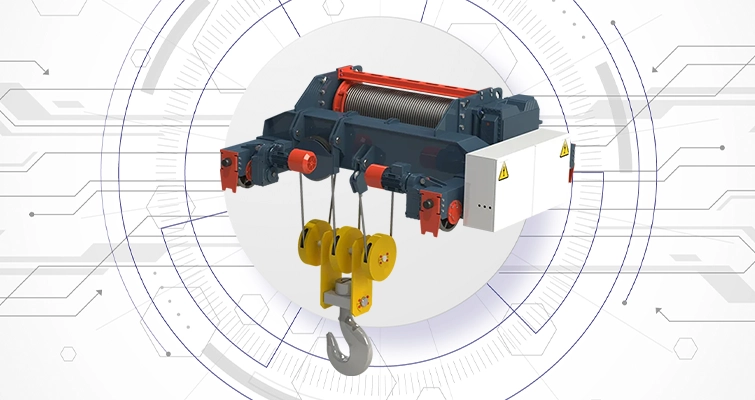
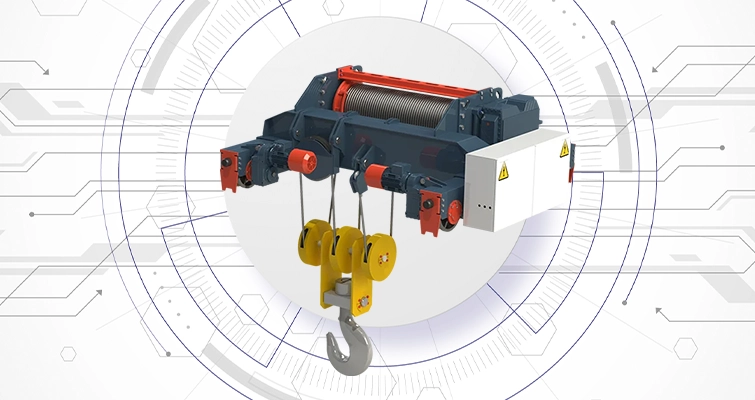
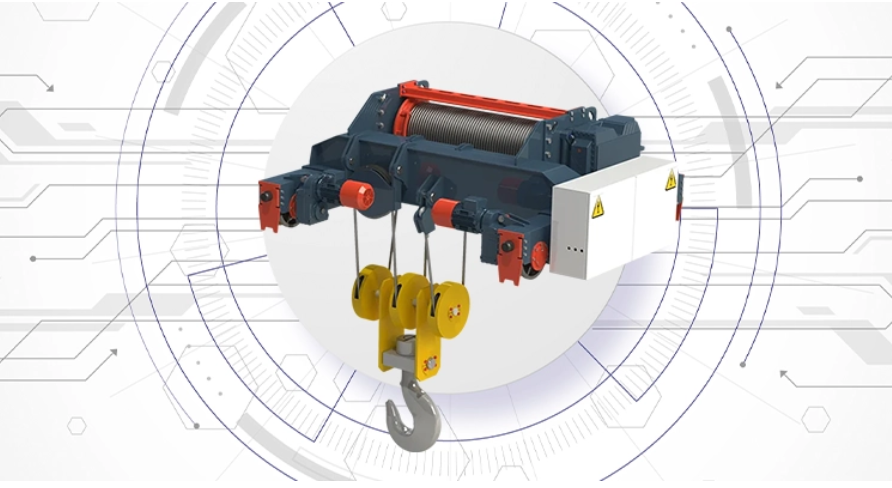
In industrial crane systems, the main mechanism responsible for lifting loads safely, controllably and to the required height is called the hoisting unit.
Also referred to as a hoist or hoisting mechanism in international industrial terminology, the hoisting unit is one of the most critical components used in overhead bridge cranes, gantry cranes, monorail systems, process cranes and many other industrial lifting solutions.
The capacity and performance of a crane are not determined by the steel structure alone.
The lifting, lowering and precise positioning of the load depend directly on the technical configuration of the hoisting mechanism.
For this reason, selecting the correct hoisting unit is essential when purchasing a new crane system or modernizing an existing crane.
An incorrectly selected hoist may reduce production efficiency, increase maintenance requirements and negatively affect equipment service life.
A correctly engineered system, on the other hand, can support production continuity by matching the actual operating conditions of the facility.
How Does a Hoisting Unit Work?
The primary function of a hoisting unit is to move the load vertically.
The power generated by the electric motor is transferred through a gearbox to the lifting mechanism. In wire rope systems, the steel wire rope is wound onto or unwound from a drum.
As a result, the hook block moves upward or downward.
Depending on the project, the main components of a hoisting unit may include:
Electric motor
Gearbox
Rope drum
Steel wire rope
Rope guide
Hook block
Pulley system
Brake system
Limit switches
Overload protection systems
Electrical and control equipment
Speed control system
The compatibility of these components directly affects lifting performance.
For example, even if the electric motor has sufficient power, the expected performance may not be achieved if the gearbox ratio, rope arrangement or brake system is not suitable for the application.
For this reason, a hoisting unit should be engineered as a complete mechanical system rather than simply viewed as a collection of individual components.
Why Is the Hoisting Unit So Important?
The hoisting unit operates at the center of an industrial crane system because every lifting operation passes through this mechanism.
Especially in high-capacity industrial environments, the performance of the hoisting unit can directly affect:
Production speed
Operational safety
Precise positioning
Energy consumption
Maintenance intervals
Spare part requirements
Overall crane service life
For example, a 10-ton crane used only a few times per day in a maintenance workshop and another 10-ton crane performing hundreds of lifting cycles across three shifts may have exactly the same nominal capacity.
However, their operating requirements are entirely different.
Therefore, asking only:
“How many tons will the crane lift?”
is not sufficient.
The more important question is:
How frequently, how quickly, at what height and under what operating conditions will the crane lift the load?
Why Is Lifting Capacity Alone Not Enough When Selecting a Hoist?
Industrial buyers often search Google using terms such as:
1 ton hoisting unit
2 ton electric hoist
3 ton hoist
5 ton hoisting unit
10 ton crane hoist
20 ton electric wire rope hoist
50 ton lifting system
These are natural starting points in the purchasing process.
However, lifting capacity is only one of the key technical parameters.
The following information should also be evaluated when selecting the correct hoisting unit.
Lifting Height
The maximum vertical travel required from the hook should be clearly determined.
Operating Frequency
How many lifting cycles will the crane perform per hour or per shift?
Average Load
Will the crane frequently operate close to maximum capacity, or will it mostly handle lighter loads?
Lifting Speed
Does the production process require high-speed lifting or slower and more precise movement?
Operating Environment
Will the crane operate in a dusty, hot, humid, outdoor or heavy industrial environment?
Control Method
Will the crane be operated using pendant control, radio remote control, an operator cabin or an automated control system?
All these parameters should be evaluated together so that the hoisting mechanism can be designed according to real operating conditions.
What Is the FEM Duty Class?
One of the most commonly overlooked aspects of industrial crane selection is the duty classification.
The duty class of cranes and hoisting mechanisms is determined according to factors such as:
Load spectrum
Operating duration
Frequency of lifting cycles
Average load
Production intensity
FEM classifications are widely used in the lifting industry as a reference for determining the operating intensity for which a hoisting system is suitable.
Consider two 10-ton hoists as an example.
The first may be installed in a maintenance workshop and used only a few times per day.
The second may operate continuously across three shifts in a mass-production facility.
Although both systems have the same 10-ton lifting capacity, they may require completely different duty classifications.
For this reason, selecting a hoist based only on nominal lifting capacity can result in an unsuitable system.
The correct FEM duty class should be determined according to the actual operating profile.
What Is a Single Girder Crane Trolley?
In single girder overhead crane systems, the hoisting mechanism is designed to travel along the main bridge girder.
Single girder hoisting systems can provide a compact and efficient solution for suitable lifting capacities, spans and lifting heights.
Depending on the project, advantages may include:
Compact structure
Lower dead weight
Efficient use of available space
Improved production flow
Easier maintenance access
However, the decision between single girder and double girder configurations should not be based on cost alone.
The following factors should be considered together:
Lifting capacity
Crane span
Lifting height
Duty class
Building structure
Operating frequency
What Is a Double Girder Crane Trolley?
Double girder crane trolleys are commonly used in applications requiring higher capacities, intensive duty cycles or wider crane spans.
The hoisting mechanism is installed on a trolley that travels over two main bridge girders.
This configuration can provide a robust solution for handling heavy loads under demanding industrial conditions.
Double girder lifting systems are frequently used in:
Heavy machinery manufacturing
Steel fabrication
Iron and steel plants
Large-scale production lines
Foundries
Heavy maintenance operations
Energy facilities
EserVinç develops hoisting units for use in overhead cranes, gantry cranes, monorail systems and similar lifting applications according to different capacities, speeds and duty classifications.
What Is a Wire Rope Hoist?
Electric wire rope hoists are widely used in industrial crane systems where high capacity and intensive operating conditions are required.
In these systems, the load is lifted using steel wire rope wound onto a drum.
The rope passes through a pulley and hook block arrangement, creating the mechanical configuration required to lift heavy loads in a controlled manner.
Important design parameters include:
Wire rope diameter
Rope reeving arrangement
Drum dimensions
Pulley configuration
Hook block
Lifting height
Rope safety factors
Especially in high-capacity and high-lifting-height applications, wire rope engineering becomes one of the key aspects of the complete crane design.
Electric Chain Hoist or Wire Rope Hoist?
One of the most common questions in industrial lifting is:
“Should I choose an electric chain hoist or a wire rope hoist?”
The two technologies serve different operational requirements.
Electric chain hoists are commonly used in compact lifting applications within certain capacity ranges.
Electric wire rope hoists are often preferred in projects requiring:
Higher lifting capacity
Greater lifting height
More intensive operating cycles
Higher speeds
More demanding industrial conditions
The correct selection should consider:
Capacity
Operating frequency
Lifting height
Required speed
Environmental conditions
Positioning accuracy
Maintenance strategy
For this reason, one hoisting technology cannot be considered universally superior.
The most suitable system should be selected according to the application.
How Is Hoisting Speed Determined?
Higher hoisting speed does not always mean better performance.
In some production processes, faster lifting improves operational efficiency.
In other applications, precise load positioning is far more important.
Controlled low-speed movement can be particularly valuable in:
Precision machinery installation
Mold changing operations
Positioning of large components
Steel structure assembly
Process crane applications
For these reasons, dual-speed or frequency-controlled lifting systems may be preferred.
Controlled acceleration and deceleration can also help reduce load swing and allow operators to position loads more accurately.
What Are the Advantages of Inverter-Controlled Crane Systems?
Modern industrial crane systems may use variable frequency drives to control motor speed.
Depending on the application, inverter-controlled systems can provide advantages such as:
Smooth acceleration
Smooth deceleration
Precise speed control
Reduced mechanical shock
More controlled load movement
Improved operator comfort
In intensive production environments, reducing sudden starts and stops may also improve the operating conditions of mechanical components.
Why Is the Brake System Critical in a Hoisting Unit?
The brake system is one of the most important safety components in any lifting operation.
When the hoisting motor stops, the brake must prevent the suspended load from moving downward uncontrollably.
This becomes especially critical in high-capacity and heavy-duty crane applications.
Depending on the project, different brake configurations, redundant safety systems or special process-specific solutions may be required.
For this reason, brake selection should be based on:
Lifting capacity
Duty class
Operating frequency
Process risk
Safety requirements
What Is an Overload Protection System?
One of the key safety components used in modern hoisting systems is an overload protection system.
This system helps prevent the crane from lifting loads above its designed capacity.
Attempting to lift an excessive load may create unwanted stresses on:
Wire rope
Electric motor
Gearbox
Hook block
Steel structure
Travelling mechanisms
For this reason, load monitoring and overload protection are important elements of modern industrial crane safety.
How Is Lifting Height Calculated?
Lifting height is determined according to the vertical travel required between the lowest and highest hook positions.
However, the building height alone is not sufficient.
The following parameters should also be considered:
Crane rail elevation
Bridge girder depth
Hoisting unit dimensions
Hook approach distance
Load height
Lifting attachment dimensions
In factories with limited ceiling height, compact hoisting solutions may be required to maximize the available hook height.
For this reason, accurate site measurement is particularly important when installing a crane in an existing facility.
Which Crane Systems Use Hoisting Units?
Hoisting mechanisms are used in many industrial crane configurations.
Overhead Bridge Cranes
The hoisting unit travels across the crane bridge and provides lifting coverage over a wide working area inside the factory.
Gantry Cranes
The hoisting mechanism travels on the gantry structure and is widely used in outdoor areas and independent crane installations.
Jib Cranes
Hoisting units can be installed on jib arms for localized lifting operations around specific workstations.
Monorail Systems
The hoisting unit travels along a fixed monorail route where loads must follow a predefined production path.
Process Cranes
Custom-designed hoisting mechanisms may be required in high-duty applications involving specialized loads and demanding production processes.
What Is the Difference Between a Hoisting Unit and a Travelling Unit?
These two terms are sometimes confused.
A hoisting unit moves the load vertically upward and downward.
A travelling unit moves the crane bridge or trolley horizontally.
In simple terms:
Hoisting unit = moves the load up and down.
Travelling unit = moves the crane or trolley forward, backward, left or right.
In overhead crane systems, these mechanisms operate together so that the load can be transferred between different points within the working area.
What Determines Crane Hoisting Unit Prices?
Searches such as “crane hoisting unit prices”, “10 ton hoist price” and “electric wire rope hoist price” are common during the purchasing process.
However, a single standard price cannot accurately represent most industrial lifting projects.
The main cost factors include:
Lifting capacity
Lifting height
Duty classification
Motor power
Hoisting speed
Dual-speed or inverter control
Wire rope configuration
Drum design
Hook block
Brake system
Trolley structure
Electrical and control equipment
Automation level
Operating environment
Project-specific safety systems
As a result, two 5-ton, 10-ton or 20-ton hoisting units can have significantly different prices depending on their technical configuration.
The most accurate quotation requires an engineering evaluation based on actual operating conditions.
What Information Should Be Provided When Buying a Hoisting Unit?
Providing the correct technical data helps accelerate the quotation and engineering process.
1. Maximum Load
What is the heaviest load that must be lifted?
2. Lifting Height
How many meters must the hook travel vertically?
3. Daily Operating Time
How many hours or shifts will the crane operate?
4. Number of Lifting Cycles
Approximately how many lifting operations will be performed per hour?
5. Operating Environment
Will the crane operate indoors or outdoors?
6. Crane Type
Will the hoisting unit be used on a single girder, double girder, gantry, jib or monorail system?
7. Speed Requirements
Is standard speed sufficient, or is precise speed control required?
8. Load Type
Will the crane handle machinery, steel structures, molds, coils, sheet metal, stone, ladles or other specialized loads?
These details allow the hoisting system to be engineered more accurately.
Can the Hoisting Unit of an Existing Crane Be Replaced?
In some existing crane systems, replacing or modernizing the hoisting unit may be technically possible.
However, before selecting a new system, the following should be inspected:
Existing bridge structure
Wheel loads
Electrical infrastructure
Crane runway
End carriages
Supporting steel structure
If an increase in lifting capacity is being considered, simply installing a higher-capacity hoist is not sufficient.
A capacity increase may also affect:
Crane bridge
End carriages
Wheel loads
Rail system
Building columns
Supporting structures
For this reason, any capacity upgrade should be evaluated through engineering calculations.
Why Is the Right Hoisting System a Long-Term Investment?
Crane systems operate as an active part of production for many years.
Therefore, the investment should not be evaluated only according to the initial purchase cost.
A correctly engineered hoisting system can help:
Support production flow
Improve cycle times
Reduce the risk of unplanned downtime
Simplify maintenance planning
Improve load control
Support efficient equipment life
For this reason, the hoisting unit should be considered a key element of the production infrastructure rather than simply another machine component.
Industrial Crane and Hoisting System Manufacturing in Konya
Konya is one of Türkiye's major industrial centers, with strong activity in machinery manufacturing, steel fabrication, automotive components, agricultural machinery, foundry operations and metal processing.
This industrial structure creates significant demand for reliable industrial lifting systems.
EserVinç develops engineering and manufacturing solutions for:
Overhead bridge cranes
Gantry cranes
Jib cranes
Process cranes
Hoisting units
Travelling units
Hoisting units are engineered according to crane type, lifting capacity, lifting height, operating intensity and required speed.
The objective is not simply to create equipment capable of lifting a specified tonnage.
The objective is to develop a lifting system that matches the actual operating conditions of the production process.
Frequently Asked Questions
What is a crane hoisting unit?
A crane hoisting unit is the main mechanical system responsible for raising and lowering loads. It typically includes components such as the motor, gearbox, drum, wire rope, brake and hook block.
What does “hoist” mean?
Hoist is the common English term used in the lifting industry for the mechanism that raises and lowers a load. It may also be referred to as a hoisting unit or lifting mechanism.
What lifting capacities are available for hoisting units?
The capacity depends on the application and project requirements. Hoisting units can range from low-capacity local lifting systems to high-capacity heavy industrial crane applications.
How much does a 10 ton hoist cost?
There is no single standard price for a 10-ton hoist. Lifting height, duty class, lifting speed, trolley configuration, motor and gearbox design, and control equipment all affect the final cost.
What is the difference between single girder and double girder hoisting systems?
In single girder systems, the hoisting mechanism operates in a configuration designed around one main bridge girder. In double girder systems, the trolley travels over two main bridge girders. The correct choice depends on capacity, span, lifting height and duty class.
How is the crane hoisting motor selected?
Motor power should be determined through engineering calculations based on lifting capacity, required speed, rope reeving configuration, duty classification and mechanical system design.
Is an inverter-controlled hoisting system necessary?
Variable frequency control can provide advantages where precise speed control, smooth acceleration and controlled stopping are required. The need depends on the production process.
Can the lifting capacity of an existing crane be increased?
In some systems it may be technically possible, but the bridge, rails, columns, wheels and supporting structures must be verified through engineering calculations before any capacity increase.
Choose the Right Hoisting Unit with EserVinç
Selecting the correct hoisting unit for an industrial crane requires much more than determining the required lifting capacity.
Operating intensity, lifting height, speed requirements, duty classification, facility conditions and the production process should all be evaluated together.
From single girder crane trolleys and double girder hoisting systems to gantry crane applications and custom process solutions, every project has different engineering requirements.
EserVinç develops hoisting solutions according to the actual operating requirements of the facility, selecting the appropriate capacity, duty class and movement characteristics for each application.
For new crane investments, hoisting unit requirements, existing crane modernization or custom industrial lifting projects, contact EserVinç to request a technical evaluation and project quotation.
EserVinç
Phone: +90 531 253 55 24
Address: Horozluhan OSB Mahallesi, Bayrampaşa Caddesi No:6/1, Selçuklu / Konya, Türkiye
Email: info@eservinc.com