




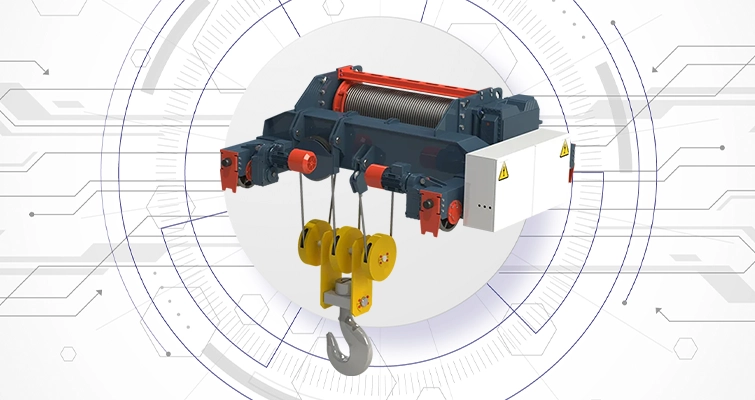
What Are Crane Safety Systems? The Foundation of Safe Operation in Industrial Lifting Processes
What Are Crane Safety Systems? The Foundation of Safe Operation in Industrial Lifting Processes
Smart Safety Solutions That Reduce Risks in Heavy Load Handling Operations
In industrial facilities, crane systems are among the most critical equipment used to handle heavy loads safely and in a controlled manner. Overhead travelling cranes, gantry cranes, jib cranes, process cranes, hoisting units, and travelling systems play an important role in production, assembly, shipment, maintenance, and storage processes.
However, heavy load handling operations require high attention, proper engineering, and a strong safety infrastructure. A crane should not only be capable of lifting a load. It must lift the load safely, move it in a controlled manner, respond correctly to the operator, and prevent potential risks before they occur.
For this reason, crane safety systems are an essential part of modern industrial lifting solutions. Properly planned safety equipment reduces the risk of workplace accidents, protects production continuity, extends equipment service life, and strengthens operational safety.
Eser Vinç does not only manufacture powerful crane systems with its engineering-oriented approach in industrial lifting systems; it also evaluates project-specific safety solutions that ensure safe, controlled, and long-lasting operation.
What Is a Crane Safety System?
A crane safety system refers to all mechanical, electrical, and electronic protection equipment used to protect the operator, load, facility, equipment, and surrounding employees during crane operation.
These systems ensure that the crane operates within its defined working limits. They prevent overload lifting, control movement distances, stop the system in emergencies, reduce load swing, and support operators with safer operation.
Crane safety systems are generally used for the following purposes:
Preventing overload risks
Preventing uncontrolled load movement
Increasing operator safety
Reducing equipment damage
Preventing production downtime
Reducing collision risks
Keeping hoisting and travelling movements under control
Strengthening workplace safety standards
These systems are especially important in heavy industrial facilities, steel construction production, precast concrete yards, machinery manufacturing, energy facilities, the automotive industry, and process lines.
Why Is Safety Critical in Cranes?
Crane systems operate with heavy loads. When the weight of the load, intensity of the working area, operator movements, facility structure, and production tempo are evaluated together, the safety level directly affects business performance.
A crane system with insufficient safety equipment may create the following risks:
Overload lifting
Load dropping
Load swing
Braking problems
Rail and wheel stress
Hook and wire rope deformation
Loss of operator control
Crane collisions
Production line downtime
Equipment damage
Workplace accident risk
To prevent these risks, safety equipment must be planned correctly from the beginning of the crane design process. Safety solutions added later may be sufficient in some cases; however, the most accurate approach is to determine the safety infrastructure according to the intended operating scenario during the design phase.
Eser Vinç evaluates safety systems in detail in project-specific crane solutions, along with capacity, span, lifting height, and working class.
Overload Protection System
The overload protection system is one of the most fundamental safety components that prevents the crane from lifting loads above its rated capacity. Regardless of the crane capacity, the system must operate within safe load limits.
Overload lifting may cause the following problems:
Stress on wire rope and hook
Motor and gearbox damage
Excessive load on the brake system
Structural deformation
Risk of load dropping
Threat to operator safety
When the overload protection system detects a load above the crane capacity, it limits or stops the hoisting operation. In this way, the load, equipment, and employees are protected.
Overload protection equipment is especially critical in overhead travelling cranes, gantry cranes, and process crane systems.
Limit Switch System
A limit switch is a safety system that controls the movement limits of the crane. It can be used on different axes such as lifting, lowering, left-right movement, forward-backward travelling, and trolley movement.
Thanks to the limit switch system, the crane does not move beyond its defined mechanical boundaries. This system reduces the following risks:
Excessive hook lifting
Uncontrolled lowering of the load
Trolley movement beyond the limit
Collision during bridge travelling movement
Mechanical stress
Irregular unwinding of the wire rope from the drum
Limit switch systems keep crane movements within safe limits, extend equipment service life, and reduce risks caused by operator errors.
Emergency Stop System
The emergency stop system is a safety component that allows the crane to be stopped quickly in risky situations. When the operator detects any danger, the system can be stopped safely by pressing the emergency stop button.
The emergency stop system is especially important in the following situations:
Difficulty in load control
Sudden movement of people in the working area
Equipment failure
Increased load swing
Control system error
Collision risk
Electrical problem
In modern crane systems, the emergency stop infrastructure must operate in integration with the control system. This system should be tested regularly and must always be accessible.
Brake System
The brake system is one of the most critical mechanical components of crane safety. The brake system must operate strongly and reliably to stop, hold, and move the load in a controlled manner.
In cranes, the brake system functions in the following areas:
Control of hoisting movement
Safe holding of the suspended load
Stopping travelling movement
Control of trolley movement
Stopping movement in emergency situations
Performance loss in the brake system may create serious risks during heavy load handling operations. For this reason, brake pads, brake discs, drum surfaces, electrical connections, and response time must be checked regularly.
In heavy-duty cranes, safety can be increased by using a double brake system.
Hook Safety System
The hook is one of the most important components that comes into direct contact with the load. Therefore, hook safety is a fundamental issue in crane operation.
Main factors to consider in hook safety include:
Hook safety latch
Hook throat opening
Deformation inspection
Crack inspection
Load-bearing surface
Connection pin
Swivel mechanism
The hook safety latch helps prevent the lifting attachment from slipping out of the hook. However, this system must be inspected regularly to ensure proper operation.
Deformations on the hook may create major risks during heavy load handling. Therefore, the hook must be examined in detail during periodic maintenance.
Wire Rope Safety
In wire rope crane systems, the steel wire rope is one of the main components of load handling. The strength of the wire rope directly determines safe crane operation.
Main points to check for wire rope safety include:
Broken wires
Crushing
Corrosion
Reduction in rope diameter
Irregular winding
Excessive wear
Winding order on the drum
Connection points
Even small deformations in the wire rope may grow over time and create a risk of rupture. Therefore, wire rope inspections must be carried out regularly, and damaged ropes must be replaced on time.
Eser Vinç evaluates the compatibility of wire rope, hook, and hoisting unit from an engineering perspective to ensure safe lifting performance in crane systems.
Anti-Sway Technology
Anti-sway technology is an advanced safety and control system that reduces load swing. During the handling of heavy loads, swinging makes operator control more difficult and creates risks in the working area.
Anti-sway technology provides the following advantages:
Reduces load swing
Provides more precise positioning
Reduces operator errors
Increases production speed
Supports equipment and product safety
Reduces collision risk
Improves efficiency in process cranes
This technology provides major advantages especially in process cranes, wide-span overhead travelling cranes, heavy load handling operations, and precision assembly applications.
Eser Vinç can evaluate anti-sway technology according to the operational needs of the business in project-specific crane solutions.
Anti-Collision Systems
In facilities where multiple cranes operate on the same line, collision risk is an important safety issue. Anti-collision systems control the approach of cranes to each other or to equipment in the working area.
These systems are used in the following areas:
Overhead travelling cranes operating on the same rail line
Gantry crane applications
Intensive production halls
Automated production lines
Process crane systems
Narrow working areas
Anti-collision sensors can allow the crane to slow down or stop after reaching a certain distance. In this way, the risk of equipment damage and production downtime is reduced.
Audible and Visual Warning Systems
In areas where cranes operate, surrounding employees as well as the operator must be informed. Audible and visual warning systems notify the environment that the crane is in motion.
These systems are especially important in:
Intensive production areas
Noisy factory environments
Outdoor operations
Night shifts
Shipment areas
Heavy load handling zones
Warning systems increase awareness in the working area and help prevent potential accidents.
Wind Safety System
In crane systems operating outdoors, such as gantry cranes, wind impact is an important safety factor. Wind conditions must be considered for the safe operation of high-capacity and wide-span cranes in open areas.
Wind safety systems are used for the following purposes:
Increasing outdoor working safety
Preventing uncontrolled movement of the gantry crane
Warning the operator
Limiting operation at certain wind speeds
Protecting equipment safety
These systems are especially important in gantry cranes, outdoor cranes, shipyard cranes, precast concrete yards, and stock areas.
PLC-Controlled Safety Infrastructure
In modern crane systems, PLC-controlled safety infrastructure allows movements to be managed in a more controlled and traceable manner. PLC systems enable crane operating scenarios to be programmed, speeds to be controlled, and safety systems to work in integration.
Advantages of PLC-controlled systems include:
Precise movement management
Integration with safety systems
Automation compatibility
Operation monitoring
Reduced risk of error
Programmable operating scenarios
More controlled speed management
PLC-controlled infrastructure provides major advantages especially in process cranes and intensive production lines.
Eser Vinç can evaluate PLC-controlled systems according to the production structure of the business while developing technological and safe crane solutions.
In Which Cranes Are Safety Systems Used?
Crane safety systems can be used in all types of industrial cranes. However, the scope of safety equipment varies depending on the crane type, capacity, working area, and operating intensity.
Safety Systems in Overhead Travelling Cranes
In overhead travelling cranes, overload protection, limit switches, brake systems, anti-sway technology, anti-collision systems, and PLC-controlled infrastructure can be preferred.
Safety Systems in Gantry Cranes
In gantry cranes, wind safety, rail line control, travelling group safety, audible and visual warnings, and anti-collision systems are important due to outdoor working conditions.
Safety Systems in Jib Cranes
In jib cranes, hook safety, overload protection, brake system, limit switches, and connection point safety are the main priorities.
Safety Systems in Process Cranes
In process cranes, safety systems must be planned more comprehensively because these systems operate continuously. PLC control, anti-sway, double brakes, overload protection, speed control systems, and safety sensors play a critical role.
The Importance of Maintenance in Crane Safety Systems
Having safety systems installed on a crane is not enough on its own. These systems must be tested, maintained, and calibrated regularly when necessary.
Main safety components that require maintenance include:
Overload protection system
Limit switch equipment
Brake system
Emergency stop circuit
Hook safety latch
Anti-sway infrastructure
Anti-collision sensors
Audible and visual warnings
PLC control system
Electrical panel connections
Safety systems that are not maintained regularly may fail to respond correctly when needed. Therefore, safety equipment must be checked in detail during crane maintenance processes.
Safe Crane Systems with Eser Vinç
Eser Vinç considers safety as one of the fundamental elements of engineering in industrial lifting systems. Each business has different working areas, load capacities, production tempos, and operating intensities. Therefore, crane safety systems must also be evaluated on a project-specific basis.
Eser Vinç’s approach to safe crane solutions includes:
Project-specific engineering analysis
Safety planning suitable for load capacity
Overload protection systems
Limit switch applications
Safe brake systems
Anti-sway technology options
PLC-controlled infrastructure solutions
Anti-collision systems
Audible and visual warning systems
Professional installation and commissioning
Service and maintenance support
Eser Vinç does not only provide crane systems to businesses; it develops integrated lifting solutions that focus on safe production, long service life, and uninterrupted operation.
Factors Affecting Crane Safety System Prices
Crane safety system prices vary depending on the crane type, capacity, and the scope of equipment required. Since every facility has different operating conditions, safety system planning must be project-based.
Main factors affecting the price include:
Crane type
Lifting capacity
Working class
Span measurement
Lifting height
Scope of safety equipment
PLC control requirement
Anti-sway technology
Anti-collision systems
Wind safety system
Electrical panel infrastructure
Installation conditions
Need for existing crane modernization
Service and maintenance expectations
For the most accurate solution, the crane system should be analyzed on site and the safety system should be planned according to the facility’s safety requirements.
Conclusion
Crane safety systems are one of the essential requirements for safe, controlled, and efficient operation in industrial lifting processes. Overload protection, limit switches, emergency stop systems, brake systems, hook safety, wire rope control, anti-sway technology, anti-collision systems, audible and visual warnings, and PLC-controlled infrastructures strengthen the safety level of modern crane systems.
A crane equipped with the right safety systems reduces the risk of workplace accidents, protects production continuity, makes operator use easier, and extends equipment service life. Therefore, when investing in a crane, not only capacity and price but also safety infrastructure must be evaluated in detail.
Eser Vinç provides safe, efficient, and project-specific crane solutions with its engineering strength in industrial lifting systems. For overhead travelling cranes, gantry cranes, jib cranes, process cranes, or existing crane safety modernization needs, you can contact Eser Vinç to determine the most suitable safe lifting system for your business.