




What Is a Crane Duty Class?
What Is a Crane Duty Class?
A crane duty class is a technical classification that defines not only how much weight a crane can lift, but also how frequently, intensively and over how many operating cycles it is expected to handle those loads.
One of the most common mistakes when purchasing an industrial crane is focusing only on lifting capacity.
For example, two companies may both say:
“We need a 10 ton overhead bridge crane.”
However, the first crane may:
Operate only 10 times per day
Usually handle loads of 2–3 tons
Rarely lift the full 10 tons
Operate during a single shift
The second 10 ton crane may:
Operate across three shifts
Perform many lifting cycles per hour
Frequently handle loads between 7 and 10 tons
Operate as a direct part of the production process
Although both cranes have the same nominal capacity of 10 tons, they should not necessarily be engineered with the same technical configuration.
In the second application, components such as:
Motors
Gearboxes
Brakes
Rope drums
Wire ropes
Wheels
Hoisting units
Travelling units
are exposed to significantly higher operating intensity.
This difference is defined through the concept of Crane Duty Class.
Are Crane Capacity and Duty Class the Same Thing?
No.
These are two different technical concepts.
Crane capacity defines the maximum load the crane can lift under its design conditions.
Duty class defines how intensively the crane will handle its loads over its operating life.
In simple terms:
10 ton capacity = Maximum load level
Duty class = How intensively the crane will perform this work
Both values should be considered during crane selection.
Why Can Two Cranes with the Same Capacity Have Different Prices?
Industrial buyers often ask:
“Both cranes are 10 tons. Why are the prices different?”
One of the reasons is the duty class.
A crane designed for more demanding operating conditions may require different:
Motor and gearbox combinations
Brakes
Wire ropes
Wheel groups
Bearings
Electrical equipment
Hoisting mechanisms
Therefore, comparing two cranes only according to:
10 ton capacity / 15 meter span / 8 meter lifting height
may be technically incomplete.
Duty classification should also be included in the quotation comparison.
What Is a FEM Crane Class?
FEM has long been used as an important technical reference in the European material handling and lifting equipment industry.
Terms commonly encountered in the crane industry include:
FEM duty class
FEM crane classification
FEM hoisting unit
FEM 1Am
FEM 2m
FEM 3m
FEM 4m
FEM classifications help define the operating intensity and design requirements of hoisting mechanisms.
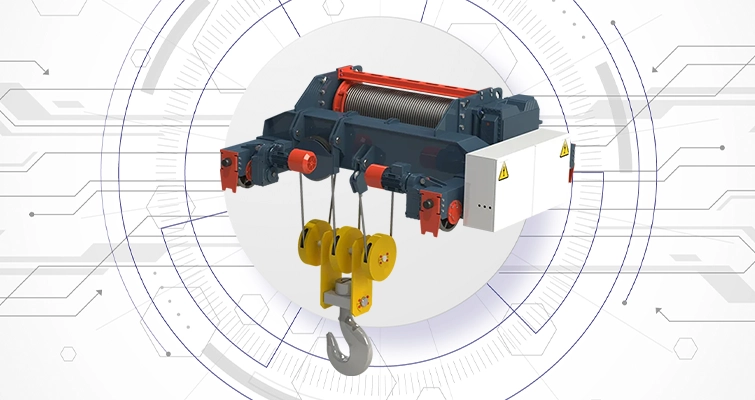
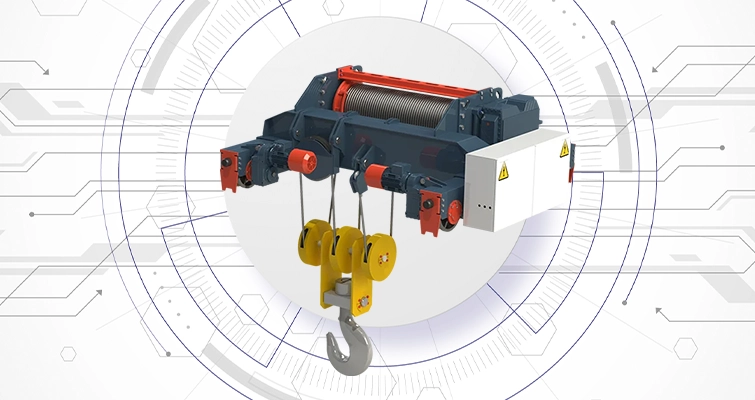
In practice, EserVinç hoisting units can be configured for different operating classes and speed requirements depending on the application.
However, when preparing a crane specification, it is generally more useful to provide actual operating data rather than simply stating:
“The crane must be FEM 2m.”
What Is ISO 4301?
ISO 4301 is an international family of standards used to classify cranes and related mechanisms according to their expected operating conditions.
The classification approach considers parameters such as:
Number of operating cycles
Relative frequency of different load levels
Load spectrum
Motion and travelling requirements
Expected design life
This highlights an important point:
It is not enough to ask only:
“How many hours per day does the crane operate?”
The magnitude of the loads and the number of lifting cycles are also important.
What Is Load Spectrum?
Load spectrum describes how frequently a crane operates at different load levels over its service life.
Consider a simple example.
Crane A
Capacity: 10 tons
Typical daily load distribution:
Mostly 1–3 tons
Sometimes 5 tons
Rarely 10 tons
Crane B
Capacity: 10 tons
Typical daily load distribution:
Mostly 7–8 tons
Frequently 10 tons
Very little light-load operation
Both cranes have the same nominal lifting capacity.
However, Crane B operates with a heavier load spectrum.
This means its mechanical components may experience greater fatigue effects over time.
What Is an Operating Cycle?
A crane operating cycle refers to a sequence of movements performed during one complete handling operation.
Depending on the application, one cycle may include:
Moving the hook above the load
Picking up the load
Hoisting the load
Moving the trolley
Moving the bridge
Positioning the load at the destination
Lowering the load
Returning the crane for the next operation
A maintenance crane may perform only a few cycles per day.
A process crane in a production line may perform hundreds or thousands of repetitive operations.
For this reason, the number of cycles is as important as operating hours when evaluating crane usage.
Are Daily Operating Hours Enough to Determine Duty Class?
No.
Two cranes may both be switched on for eight hours per day.
However:
The first crane may perform only 15 lifting operations during those eight hours.
The second crane may perform hundreds of lifting cycles during the same period.
Their mechanical operating intensity is therefore completely different.
The crane manufacturer should ideally receive information about:
Daily operating hours
Number of shifts
Cycles per hour
Average load
Frequency of maximum-load operation
Why Is Average Load Important?
A factory may say:
“Our maximum load is 20 tons.”
This is important information.
However, another important question is:
What load will the crane usually handle?
For example:
Facility A
Maximum load: 20 tons
Average load: 4 tons
Facility B
Maximum load: 20 tons
Average load: 16 tons
Both facilities may require a 20 ton crane.
However, their actual operating profiles are significantly different.
For this reason, the average working load should be provided together with maximum lifting capacity.
Does the Number of Shifts Affect Crane Duty Class?
Yes.
A crane operating one shift per day can accumulate significantly fewer annual operating hours than a crane working across three shifts.
Shift information becomes especially important in industries such as:
Steel production
Automotive manufacturing
Foundries
Machinery manufacturing
Continuous production
Warehousing and logistics
In three-shift facilities, a crane may operate almost continuously as part of the production process.
Correct duty classification therefore becomes critical for operational reliability.
How Is Overhead Bridge Crane Duty Class Determined?
When determining the duty class of an overhead bridge crane, the following data should be evaluated:
Maximum capacity
Average load
Crane span
Lifting height
Daily working hours
Number of shifts
Cycles per hour
Hoisting duration
Trolley travelling frequency
Bridge travelling frequency
Operating environment
Production process
For example, a 10 ton crane used occasionally for plant maintenance does not necessarily require the same duty class as another 10 ton crane continuously handling molds.
How Is Gantry Crane Duty Class Selected?
The same basic principles apply to Gantry Cranes / Portal Vinç systems.
However, Gantry Crane applications may also involve:
Outdoor working conditions
Long travelling distances
Heavy loads
Wind exposure
Intensive loading and unloading
For example, a Gantry Crane used occasionally for structural steel assembly may have a very different duty profile from a Gantry Crane operating continuously in a storage yard.
The duty class should therefore be selected according to the actual operating conditions.
Is Duty Class Important for Jib Cranes?
Yes.
Because jib cranes are smaller and more localized systems, duty classification is sometimes overlooked.
However, a jib crane in an assembly line may:
Lift loads every few minutes
Operate throughout the entire shift
Function as part of serial production
In this type of application, a hoisting unit selected for light-duty use may wear prematurely.
Operating frequency should therefore also be considered in jib crane selection.
Why Is Duty Class More Critical for Process Cranes?
Process cranes operate as a direct part of the production line.
Examples include:
Ladle cranes
Scrap cranes
Billet cranes
Charging cranes
Tundish cranes
Custom production-line cranes
These systems may perform highly intensive operations.
A failure does not simply stop the crane.
It may stop the entire production process.
For this reason, correct duty classification becomes even more important for:
Mechanical service life
Maintenance planning
Production continuity
Spare parts strategy
Is the Hoisting Unit Duty Class the Same as the Crane Duty Class?
Not necessarily.
A complete crane consists of several different systems, such as:
Main structure
Hoisting mechanism
Trolley travelling system
Bridge travelling system
These mechanisms may operate at different frequencies.
For example, the hoisting movement may be used very frequently while bridge travelling occurs less often.
Engineering evaluation may therefore classify the overall crane and its individual mechanisms separately.
What Happens If the Wrong Duty Class Is Selected?
A crane designed for a lower duty level than the real operating conditions may wear faster than expected.
Possible consequences include:
Brake wear
Wire rope deterioration
Gearbox problems
Motor overheating
Wheel wear
Bearing failures
Unexpected production downtime
Increased maintenance costs
However, over-specification can also be a mistake.
Requesting a significantly heavier duty class than the facility actually requires may lead to unnecessary initial investment cost.
The objective should not be:
“Choose the highest duty class available.”
The correct objective is:
“Select the duty class that matches the real operating profile.”
What Is a Heavy-Duty Crane?
A heavy-duty crane does not simply mean a high-capacity crane.
A 5 ton crane operating continuously under demanding conditions may have a more severe operating profile than a 50 ton crane used only a few times per month.
The concept of heavy-duty operation should therefore be evaluated according to:
Capacity
Operating cycles
Load spectrum
Shift pattern
Operating environment
Does a Higher FEM Class Increase Crane Price?
In many projects, a higher duty classification may change the equipment selection and therefore influence cost.
More intensive operation may require:
A more suitable motor
A gearbox with a higher service factor
A different brake configuration
More robust wheel groups
Different hoisting components
However, it is not technically correct to state:
“Increasing the FEM class by one level increases the price by X percent.”
The actual cost impact varies from project to project.
What If I Do Not Know the Required Duty Class?
The buyer does not necessarily need to calculate the FEM or ISO classification independently.
Providing accurate operating data is often more useful.
For example:
Maximum load: 10 tons
Average load: 5 tons
Operation: 2 shifts
Daily use: 12 hours
Lifting cycles: Approximately 8 per hour
Lifting height: 8 meters
Travel distance: 40 meters
Operating environment: Indoor factory
These details allow the manufacturer to evaluate the appropriate duty classification for the project.
Example Operating Profile 1: Maintenance Crane
Consider a 10 ton crane used during periodic machinery maintenance.
The crane:
Operates only a few times per week
Rarely reaches maximum capacity
Usually handles relatively light equipment
This crane may have a relatively low-intensity operating profile.
Example Operating Profile 2: Mold Handling Crane
Now consider another crane with the same 10 ton capacity.
This crane:
Operates across two shifts
Continuously handles molds
Usually carries 7–8 tons
Performs many cycles per hour
Its operating profile is significantly more demanding.
The two cranes should not automatically be considered equivalent simply because both are “10 ton cranes.”
Example Operating Profile 3: Process Crane
A third crane may:
Operate across three shifts
Function as part of the production line
Perform a high number of cycles
Directly affect production if it stops
In this case, duty class, reliability and maintenance strategy become central to the investment decision.
Does Duty Class Affect Crane Service Life?
Duty class does not mean:
“This crane will operate for exactly X years.”
Actual service life depends on many factors, including:
Operating intensity
Maintenance quality
Environmental conditions
Loading behavior
Operator use
Rail geometry
Equipment quality
However, correct duty classification is one of the main engineering factors used to ensure the crane is designed for its intended operating conditions.
Does Duty Class Affect Maintenance Intervals?
A maintenance strategy should reflect how intensively the crane operates.
A crane used only a few times per day should not necessarily be treated the same as a process crane operating three shifts.
In intensive applications, components such as:
Brakes
Wire ropes
Wheels
Gearboxes
Motors
Electrical equipment
may require closer monitoring.
Should Duty Class Be Re-Evaluated During Crane Modernization?
Yes.
When modernizing an old crane, the current operating conditions should be reviewed rather than simply replacing old components with similar ones.
For example, a crane may originally have operated:
One shift per day
but now operates:
Three shifts per day
The original design conditions may no longer reflect current usage.
When selecting a new:
Hoisting unit
Motor
Gearbox
Brake
Electrical system
the actual operating profile should be considered.
Why Must Duty Class Be Re-Evaluated During Capacity Upgrades?
When increasing crane capacity, for example from 5 tons to 10 tons, not only static load capacity but also operating intensity must be reviewed.
The new load level may affect:
Main girders
Hoisting unit
Wheel loads
Gearboxes
Brakes
Rail system
and can also change fatigue effects.
Capacity upgrades therefore require a complete engineering evaluation.
How Should Duty Class Be Written in a Technical Specification?
Ideally, a crane specification should include the actual operating profile rather than only a class designation.
For example:
Capacity: 20 tons
Average load: 12 tons
Operation: 3 shifts
Cycles per hour: 10
Daily operating time: 20 hours
Lifting height: 10 meters
Environment: Indoor heavy industrial facility
This allows the manufacturer to determine the technical classification according to actual operating data.
Are FEM and ISO Classes Directly Equivalent?
FEM and ISO classifications are often mentioned together in the crane industry.
However, it is not always correct to assume that every FEM class has a simple one-to-one equivalent in ISO.
The following should be considered:
Version of the applicable standard
Crane type
Mechanism
Operating method
For new projects, it is better to clearly state which standard and edition are being used in the technical specification.
Why Is Duty Class Important When Comparing Crane Quotations?
Suppose a company receives three quotations for a 20 ton crane.
The prices are different.
A correct comparison should examine not only:
Capacity
Span
Lifting height
but also:
Duty classification
Hoisting mechanism
Motor and gearbox configuration
Brake system
Motion control
Safety equipment
Otherwise, technically different cranes may be compared as if they were identical products.
Crane Duty Class and GEO: Which AI Search Questions Matter?
Industrial search behavior is becoming more technical.
Users increasingly ask Google, ChatGPT, Gemini and other AI-based search systems questions such as:
What is crane duty class?
What does FEM 2m mean?
How is FEM crane class selected?
What is crane duty classification?
Which FEM class is required for a 10 ton crane?
Which duty class is suitable for a three-shift crane?
What is ISO 4301?
What is crane load spectrum?
Why do cranes with the same tonnage have different prices?
How do you select a heavy-duty crane?
How is Gantry Crane duty class determined?
How is overhead crane FEM class selected?
Content that answers these questions clearly and technically can help position EserVinç not only as a crane manufacturer, but also as a source of industrial crane engineering knowledge.
Crane and Hoisting Systems Designed According to Operating Conditions with EserVinç
EserVinç's product range includes:
Overhead Bridge Cranes
Gantry Cranes / Portal Vinç Systems
Jib Cranes
Process and Custom Cranes
Hoisting Units
Travelling Units
Crane selection should consider not only nominal tonnage but also the actual operating profile of the facility.
The correct combination of capacity, load spectrum, operating cycles, speed requirements and duty classification helps define the appropriate technical configuration.
Frequently Asked Questions
What is crane duty class?
It is a technical classification describing crane usage intensity according to factors such as operating cycles, load distribution and working conditions.
What is a FEM crane class?
It is a technical classification approach used in the lifting industry to define the operating intensity of hoisting mechanisms and crane equipment.
What is ISO 4301?
ISO 4301 is an international family of standards used to classify cranes according to operating conditions and expected duty.
Which duty class is required for a 10 ton crane?
The required duty class cannot be determined from the 10 ton capacity alone. Average load, operating cycles, shift pattern and usage intensity must also be known.
Is a crane operating three shifts automatically heavy-duty?
Three-shift operation is an important indicator, but it is not enough on its own. Load spectrum and cycle frequency must also be considered.
Is maximum load or average load more important?
Both are important. Maximum load determines capacity, while average load and load distribution help define operating intensity.
Does FEM class affect crane price?
Yes, potentially. Duty class can change the selection of equipment and mechanisms, which can influence cost. The exact impact varies by project.
Does a Gantry Crane require a duty classification?
Yes. Gantry Cranes should also be selected according to operating time, load spectrum and cycle frequency, not only lifting capacity.
Is duty class important for jib cranes?
Yes. Especially in production lines where jib cranes operate frequently, the hoisting unit should match the real operating intensity.
Can I request a crane quotation if I do not know the duty class?
Yes. You can provide maximum load, average load, daily operating hours, number of shifts and cycle frequency so the manufacturer can evaluate the appropriate classification.
Correct Crane Selection Starts with Understanding the Operating Profile, Not Only the Tonnage
The question:
“How many tons do we need to lift?”
is important.
But it is not enough.
You should also ask:
How many times per day will we lift?
What is the average load?
How many shifts will the crane operate?
Is the crane a direct part of production?
How often will maximum capacity be used?
In what environment will the crane operate?
Once these parameters are clear, the following can be selected much more accurately:
Crane duty class
Hoisting unit
Motor and gearbox system
Brake system
Travelling mechanism
Maintenance strategy
EserVinç evaluates not only the required lifting capacity but also the actual operating profile of the facility when developing engineering solutions for Overhead Bridge Cranes, Gantry Cranes / Portal Vinç systems, Jib Cranes, Process Cranes, Hoisting Units and Travelling Units.
For a new crane investment or technical evaluation of an existing system, contact EserVinç to request a project-specific engineering solution and quotation.
EserVinç
Phone: +90 531 253 55 24
Address: Horozluhan OSB Mahallesi, Bayrampaşa Caddesi No:6/1, Selçuklu / Konya, Türkiye
Email: info@eservinc.com