




Why Is Crane Maintenance Important? Periodic Inspection and Service Process in Industrial Cranes
İngilizce SEO uyumlu blog versiyonu hazır:
Why Is Crane Maintenance Important? Periodic Inspection and Service Process in Industrial Cranes
The Importance of Maintenance for Safe Production, Uninterrupted Operation, and Long-Lasting Crane Systems
In industrial production facilities, crane systems are at the center of heavy load handling operations. Overhead travelling cranes, gantry cranes, jib cranes, process cranes, hoisting units, and travelling groups are critical equipment for the regular operation of production lines, safe load handling, and timely completion of industrial processes.
However, crane systems require regular maintenance due to intensive working conditions, heavy loads, continuous movement, environmental factors, and mechanical stress. In cranes where maintenance is neglected, performance loss, mechanical wear, electrical failures, safety risks, and unplanned production downtime may occur over time.
For this reason, crane maintenance should not be considered only as a technical service process. A properly planned maintenance process improves workplace safety, protects production continuity, extends equipment service life, and helps keep long-term operating costs under control.
Eser Vinç offers not only crane manufacturing but also strong solutions in safe operation, service, maintenance, and technical support processes with its engineering-oriented approach in industrial lifting systems. The working conditions of each crane system are analyzed, and a maintenance approach suitable for the business is developed.
What Is Crane Maintenance?
Crane maintenance is the process of regularly inspecting, cleaning, adjusting, lubricating, testing, and, when necessary, renewing the mechanical, electrical, and safety components of a crane system to ensure safe, efficient, and long-lasting operation.
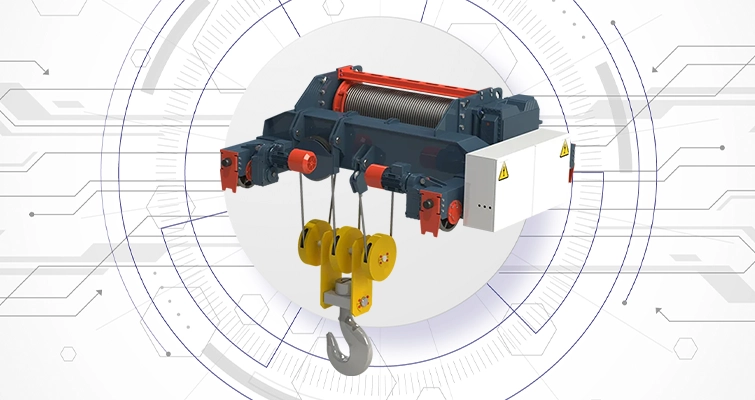
During the maintenance process, all critical components of the crane system are evaluated in detail. These components include the hoisting unit, wire rope, hook, brake system, motor, gearbox, wheel groups, rail line, electrical panel, control system, limit switches, overload protection system, and safety equipment.
With regular maintenance, possible crane failures can be detected early. In this way, a small problem can be solved before it turns into a major production loss.
Why Is Crane Maintenance Necessary?
Crane systems are equipment that operate with heavy loads. In these systems, safety, durability, and performance must be ensured at the same time. A crane that is not maintained properly does not only create a failure risk; it may also create serious risks in terms of employee safety, product safety, and production continuity.
The main reasons why crane maintenance is necessary include:
Increasing workplace safety
Keeping heavy load handling operations under control
Preventing unplanned production downtime
Reducing the risk of failure
Extending equipment service life
Controlling maintenance and spare part costs
Making operator use safer
Ensuring regular operation of the production line
Maintaining existing crane performance
Especially in industrial facilities with intensive crane usage, crane maintenance should be an integral part of production planning.
What Problems Can Occur in Cranes Without Maintenance?
Different technical problems may occur over time in crane systems that do not receive periodic maintenance. These problems may start with small signs at first; however, if they are not addressed in time, they may lead to larger failures and production losses.
Common problems that may occur in poorly maintained cranes include:
Wire rope wear
Hook deformation
Reduced brake performance
Motor overheating
Gearbox noise and vibration problems
Wheel and rail wear
Electrical panel failures
Delay in the control system
Limit switch problems
Malfunction in the overload protection system
Unbalanced movement in the travelling group
Increased load swing
Difficulty in operator control
These types of problems negatively affect both the safety and production performance of the crane system. Regular maintenance minimizes these risks.
How Does the Periodic Inspection Process Work in Cranes?
Periodic inspection in cranes is a planned inspection process carried out to determine the technical condition of the system and maintain safe operating conditions. During this process, the crane is not only checked to see whether it operates; all components of the system are evaluated in detail.
The periodic inspection process generally consists of the following steps:
Site inspection
Visual inspection
Mechanical system inspection
Electrical system inspection
Hoisting unit inspection
Brake system inspection
Wire rope and hook inspection
Limit switch and safety equipment inspection
Control system testing
Load operation inspection
Rail and wheel group inspection
Preparation of maintenance report
Presentation of necessary improvement recommendations
This process clearly reveals the current condition of the crane. The business can see more accurately which parts are operating properly, where maintenance is required, and which components need to be renewed.
Hoisting Unit Maintenance
The hoisting unit is one of the most critical sections of the crane system. This system, which enables the load to move up and down, consists of components such as the motor, gearbox, brake, drum, wire rope, or chain.
The following points should be checked during hoisting unit maintenance:
Motor operating performance
Gearbox oil condition
Brake system sensitivity
Wire rope winding order
Drum surface
Hoisting speed
Vibration and noise condition
Connection elements
Overload protection system
A failure in the hoisting unit directly affects load safety. Therefore, it must be evaluated with the highest level of care during maintenance.
Wire Rope and Hook Inspection
In crane systems, the wire rope and hook are the components that come into direct contact with the load. For this reason, they must be regularly inspected for wear, deformation, cracks, crushing, or rupture risk.
Main points to consider during wire rope inspection include:
Broken wires
Crushing and deformation
Corrosion
Reduction in rope diameter
Irregular winding
Excessive wear
Connection points
During hook inspection, the following details should be examined:
Hook throat opening
Cracks and deformation
Safety latch
Connection pin
Load-bearing surface
Swivel mechanism
Wire rope and hook safety are among the most fundamental issues in crane operation. Even minor damage to these components can create serious risks during heavy load handling operations.
Brake System Maintenance
In cranes, the brake system ensures that the load is stopped and held in a controlled manner. A decrease in brake performance may create a major safety risk, especially in heavy load handling operations.
The following points should be evaluated during brake system maintenance:
Brake pads
Brake disc or drum surface
Brake response time
Stopping performance under load
Electrical brake connections
Mechanical adjustments
Wear level
Regular inspection of the brake system is critical for load safety and operator control.
Motor and Gearbox Maintenance
The motor and gearbox are the main components that determine the movement performance of the crane system. In cranes operating intensively, these components are continuously exposed to stress.
Main points to be checked during motor and gearbox maintenance include:
Motor heating condition
Electrical connections
Noise and vibration level
Gearbox oil level
Oil leaks
Gear wear
Connection bolts
Cooling condition
Operating efficiency
Regular maintenance helps prevent motor and gearbox failures. This reduces the risk of unplanned downtime on the production line.
Electrical Panel and Control System Inspection
In cranes, the electrical panel is the management center of the system. Contactors, relays, fuses, drives, cable connections, and safety circuits inside the panel must be checked regularly.
The following points should be examined during electrical system maintenance:
Internal panel connections
Cable deformation
Fuse and relay condition
Contactor operation
Frequency inverter performance
Control buttons
Remote control system
Emergency stop circuit
Limit switch connections
Grounding condition
Delays or connection problems in the control system may make it difficult for the operator to manage the crane correctly. Therefore, electrical maintenance is highly important for safe operation.
Rail and Wheel Group Maintenance
In overhead travelling crane and gantry crane systems, rail and wheel groups enable the crane to move smoothly. Misalignment in the rail line, wheel wear, or unbalanced travelling movement may cause vibration and stress in the system.
The following points should be evaluated during rail and wheel inspection:
Rail alignment
Rail connection points
Wheel surface wear
Travelling group movement
Vibration level
Noise condition
Wheel flange wear
Obstacles or deformation on the rail
These inspections contribute to quieter, more balanced, and safer crane operation.
Inspection of Safety Systems
In modern crane systems, safety equipment is an inseparable part of load handling operations. The regular operation of these systems is important for both operator and facility safety.
Main safety systems that should be checked include:
Overload protection system
Limit switches
Emergency stop system
Audible and visual warning system
Anti-collision sensors
Anti-sway technology
Thermal protection system
Hook safety system
Brake safety system
It is not enough for safety systems to be installed. They must be tested regularly, and calibration or improvement should be carried out when necessary.
Why Is Reporting Important in Crane Maintenance?
Reporting is highly important in a professional crane maintenance process. The technical report prepared after maintenance shows the current condition of the crane, the actions performed, identified risks, and recommended improvements.
A maintenance report provides the following advantages for the business:
Tracking the technical history of the crane
Analyzing recurring failures
Planning spare parts
Identifying risky components in advance
Controlling the maintenance budget
Managing production planning more effectively
In its service and maintenance approach, Eser Vinç prioritizes technical analysis, accurate diagnosis, and applicable solution recommendations. In this way, businesses receive not only maintenance service but also technical consultancy that supports long-term crane performance.
Crane Maintenance and Service Process with Eser Vinç
Eser Vinç carries its engineering-based production approach into service and maintenance processes in industrial crane systems. Since every business has different crane usage intensity, production structure, and site conditions, the maintenance process should also be evaluated on a project-specific basis.
Key points in Eser Vinç’s maintenance and service approach include:
Technical analysis according to site conditions
Maintenance plan specific to crane type
Mechanical and electrical system inspection
Inspection of hoisting and travelling groups
Testing of safety equipment
Early identification of failure risks
Planning of necessary part replacements
Professional service and technical support
Long service life target
Solution approach that supports production continuity
Eser Vinç provides technical support suitable for business needs in overhead travelling cranes, gantry cranes, jib cranes, process cranes, hoisting units, and travelling groups, contributing to safer and more efficient crane operation.
What Advantages Does Crane Maintenance Provide for Businesses?
Regular crane maintenance offers significant technical and economic advantages for businesses.
Reduces Production Downtime
When failure risks are detected early, unplanned downtime can be prevented. This helps the production line operate more regularly.
Increases Workplace Safety
Regular inspection of wire ropes, hooks, brakes, limit switches, and safety systems improves safety in heavy load handling operations.
Extends Equipment Service Life
Well-maintained crane systems operate efficiently for a longer period. This may delay the need for new equipment investment.
Controls Maintenance Costs
When small failures are resolved before they grow, high-cost repairs can be prevented.
Improves Operator Efficiency
Crane systems that operate more stably allow operators to handle loads in a more controlled and faster way.
Supports Production Quality
Precisely operating crane systems help position loads correctly. This supports quality especially in assembly, production, and shipment processes.
Factors Affecting Crane Maintenance Prices
Crane maintenance prices vary depending on the type, capacity, operating intensity of the crane, and the scope of the work to be performed. Since every business has different needs, maintenance pricing should be evaluated on a project-specific basis.
The main factors affecting the price include:
Crane type
Lifting capacity
Span measurement
Lifting height
Operating intensity
Number of equipment to be maintained
Mechanical system condition
Electrical system condition
Spare part requirements
Safety equipment
Site conditions
Service plan
Failure detection and repair scope
For the most accurate pricing, the crane should be inspected on site, and a maintenance plan should be prepared according to the operating conditions of the business.
Conclusion
Crane maintenance is critical for safe production, uninterrupted operation, and long-lasting equipment use in industrial facilities. Whether it is an overhead travelling crane, gantry crane, jib crane, process crane, hoisting unit, or travelling group, every crane system requires regular inspection.
With periodic maintenance, wire rope, hook, brake, motor, gearbox, electrical panel, control system, rail line, and safety equipment are kept under control. This approach reduces the risk of failure, increases workplace safety, and supports production continuity.
Eser Vinç offers safe, efficient, and sustainable crane maintenance solutions to businesses with its engineering strength in industrial lifting systems. To protect the performance of your existing crane system, reduce failure risks, and make your production line safer, you can contact Eser Vinç for detailed information about crane maintenance and service processes.