




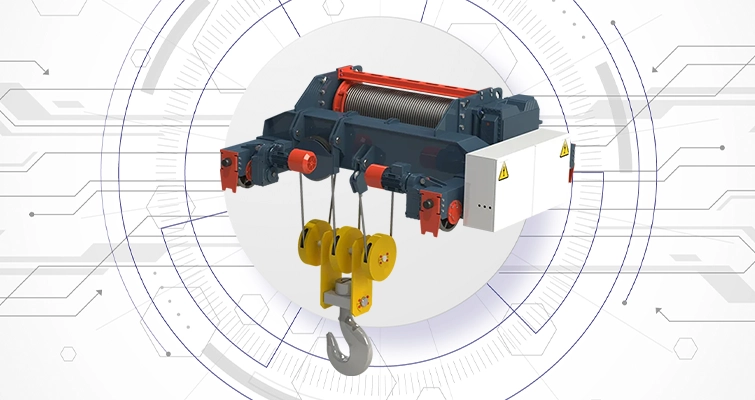
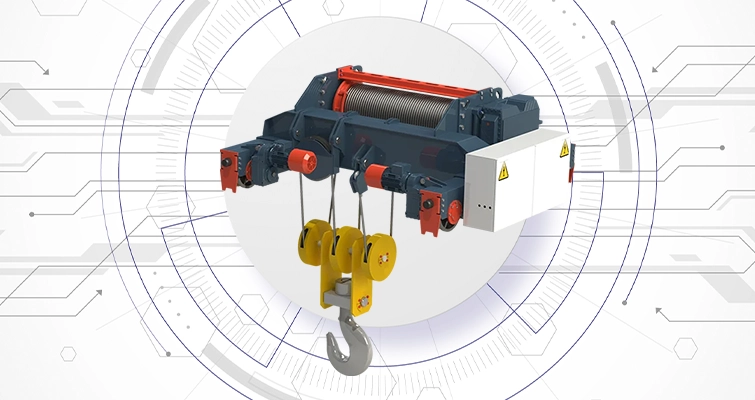
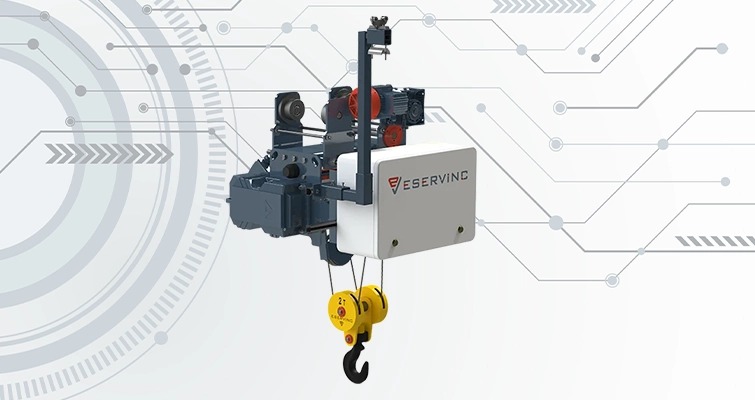
PROCESS CRANE SYSTEMS: THE IMPORTANCE OF SPECIALLY DESIGNED CRANES IN INDUSTRIAL PRODUCTION
PROCESS CRANE SYSTEMS: THE COMPREHENSIVE GUIDE TO CUSTOM INDUSTRIAL LIFTING SOLUTIONS
Industrial production processes are becoming increasingly complex, fast, and precision-driven. Standard cranes are often insufficient for operations requiring custom designs and high accuracy. This is where process crane systems come into play.
Process cranes become an integral part of the production line. Loads are not just moved from point A to B; they are fully synchronized with line speed, cycle time, precision, and safety requirements.
Eser Vinç Engineering, based in Konya, is a leading Turkish manufacturer of custom process cranes, providing both heavy-duty solutions and high-precision designs for demanding industries. This guide explains what process cranes are, their applications, advantages, and key considerations when selecting one.
1. What is a Process Crane? How is it Different from Standard Cranes?
A process crane is designed specifically for operations along a factory production line. Unlike standard overhead cranes:
-
Fully custom-built
-
Integrated with production processes
-
Lifting, positioning, and speed functions tailored to the process
-
Equipped with custom attachments such as clamps, hooks, magnetic or hydraulic grippers
-
Includes automation, PLC, sensors, and precision control
In short, process cranes are engineering solutions that become part of the production itself, not general-purpose lifting equipment.
2. Industries Using Process Crane Systems
Process cranes are used in industries with heavy load traffic, precise lifting operations, and high-speed production cycles.
Applications:
A) Metal & Steel Foundries
-
High-temperature, heavy loads with maximum safety
-
Required features: heat-resistant lifting attachments, temperature sensors, overload protection, dual-brake drives
-
Eser Vinç produces high-strength process cranes for hot casting processes
B) Cement & Concrete Production
-
Loads handled in dusty environments at high cycle rates
-
Tasks: mold transport, aggregate loading, precast element positioning, mold rotation
-
Heavy-duty process cranes are preferred
C) Energy Sector – Turbine, Generator, Transformer Manufacturing
-
Heavy and high-precision equipment
-
Systems used: inching mode, variable speed control, load sensors, automation-assisted lifting
-
Essential in turbine assembly lines
D) Defense Industry
-
Handling military vehicle bodies, armor plates, turrets, engine blocks
-
Requirements: anti-sway, PLC-controlled positioning, heavy-duty FEM 3m/4m design, redundant brakes, custom hook blocks
E) Automotive & Heavy Vehicle Production
-
Each process has different speed and weight requirements
-
Applications: chassis assembly, engine transport, press lines, sheet forming, storage
-
Fast and precise handling increases efficiency
3. Advantages of Process Cranes
A) Full Integration with Production
-
Designed according to production line specifications
-
Ensures continuous, error-free, and stable operation
B) High Precision – Millimeter Positioning
-
Standard cranes have limited accuracy
-
Process cranes use: inching mode, variable speed, encoder-based sensors
-
Essential for assembly lines
C) Custom Attachments for Flexibility
-
Magnetic lifters, hydraulic grippers, pallet carriers, tube/pipe holders, casting pot carriers, rotation attachments
-
Turns the crane into an integral production tool
D) Automation Integration
-
PLC control, synchronized lifting, remote control, anti-sway, soft start/stop, energy optimization algorithms, IoT monitoring
-
Enables production monitoring, optimization, and analysis
E) High Safety Level
-
Dual brakes, limit switches, overload sensors, emergency stop, thermal protection, collision buffers, anti-skid systems
-
Minimizes operational risks
4. Key Technical Criteria for Process Crane Design
Process crane design is more complex than standard cranes.
Considerations:
-
Duty Class – typically heavy-duty (FEM 3m, FEM 4m, ISO M7–M8)
-
Load Type, Temperature, and Handling – hot, delicate, unbalanced, long, or fixed attachments may be required
-
Lifting Height & Travel Distance – must match production line layout
-
Automation Level – automatic repetitive cycles, dual synchronized cranes, position tracking, cycle time optimization
-
Structural Strength & Material Quality – steel grade, welding, and testing determine crane lifetime
5. Why Eser Vinç is a Leader in Process Cranes
-
20+ years of custom crane manufacturing experience
-
FEM 4m heavy-duty crane design
-
PLC automation and sensor integration expertise
-
Strongest steel construction process crane equipment in Turkey
-
Hundreds of reference projects
-
Nationwide and international service network
-
Ability to design custom load attachments
Eser Vinç is not only a manufacturer but a partner in engineering solutions.
6. How Are Process Crane Prices Determined?
Unlike standard cranes, pricing depends on:
-
Load type
-
Duty cycle
-
Usage class
-
Automation level
-
Custom attachment requirements
-
Environmental factors (temperature, dust, humidity)
-
Safety standards
-
Project scope
Prices are project-specific and require detailed engineering.
7. Conclusion: Process Cranes are the Heart of Production
A poorly designed process crane can cause:
-
Production downtime
-
Safety hazards
-
High maintenance costs
-
Reduced product quality
Eser Vinç provides:
-
Custom engineering
-
Maximum safety
-
Heavy-duty design
-
PLC automation
-
Long-lasting construction
For reliable, long-term process crane systems in Turkey, Eser Vinç is the ideal choice.