




What Is a Hoisting Unit? The Main Load Lifting Mechanism in Crane Systems
What Is a Hoisting Unit? The Main Load Lifting Mechanism in Crane Systems
The Foundation of Safe, Controlled, and Efficient Lifting Performance in Industrial Cranes
Crane systems used in industrial facilities are critical equipment that enable heavy loads to be transported safely, quickly, and in a controlled manner. One of the most important components that determines the performance of overhead travelling cranes, gantry cranes, jib cranes, and process cranes is the hoisting unit.
The hoisting unit is the main mechanism that enables the load to move up and down in a crane system. Safe lifting of the load, holding it at a certain height, lowering it in a controlled manner, and responding precisely to operator commands depend on the correct design of this system.
No matter how high the load carrying capacity of a crane is, if the hoisting unit is not selected correctly, the expected safety, efficiency, and long service life cannot be achieved. Therefore, hoisting unit selection must be made by considering capacity, working class, lifting speed, motor and gearbox structure, brake system, wire rope or chain type, safety equipment, and operating intensity.
Eser Vinç develops hoisting unit solutions suitable for the needs of businesses with its engineering-oriented approach in industrial lifting systems. Each project is evaluated according to load capacity, working area, production tempo, and safety expectations, and a project-specific system structure is created.
What Is a Hoisting Unit?
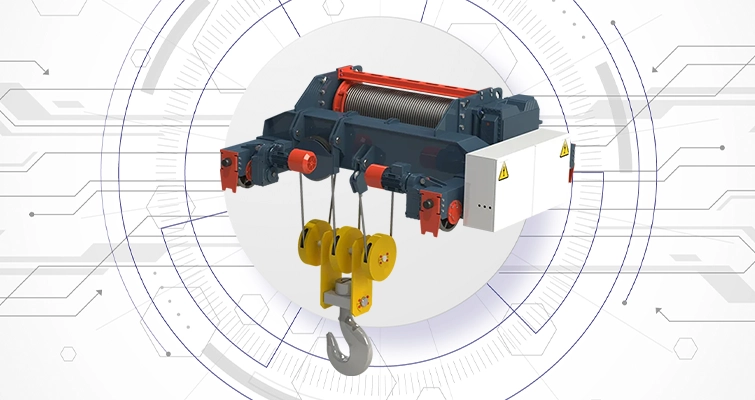
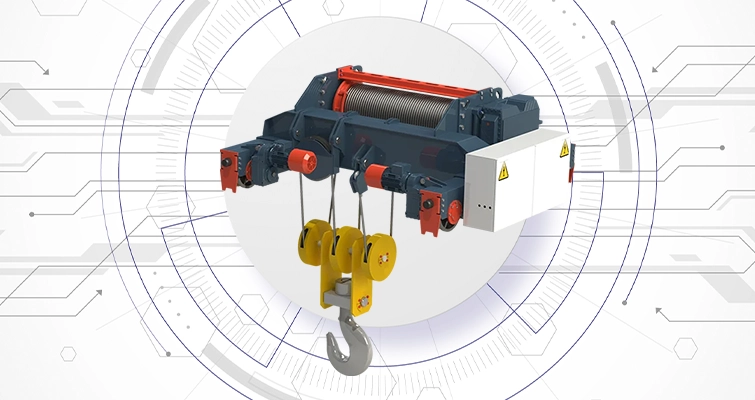
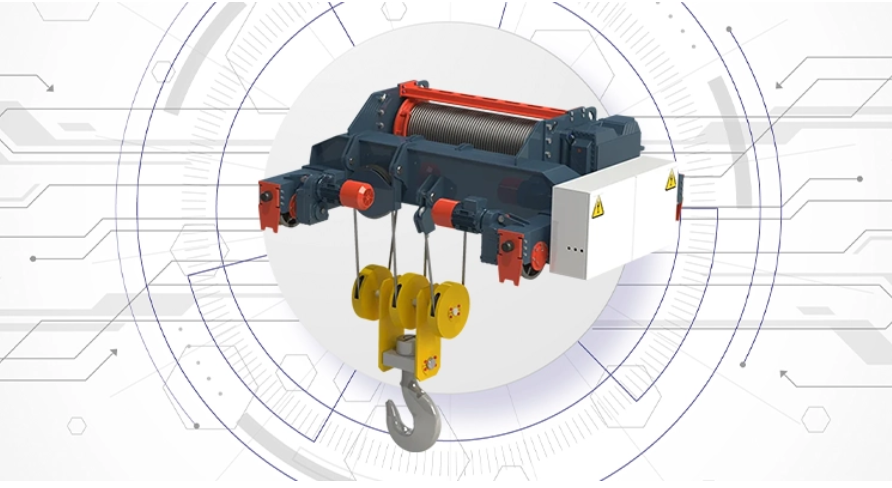
A hoisting unit is the main unit of a crane system that moves the load on the vertical axis. Lifting the load from the ground, raising it to a specific height, holding it safely while suspended, and lowering it in a controlled manner are the main functions of the hoisting unit.
This system consists of a motor, gearbox, brake, drum, wire rope, hook, electrical equipment, and safety components. In some applications, chain hoist systems may also be used. The type of system to be used is determined according to the load handling needs and operating intensity of the business.
The hoisting unit can be considered the heart of the crane system. This is because the most basic function of a crane, lifting the load, is performed directly through this mechanism. Therefore, the technical quality of the hoisting unit directly affects the overall performance and safety of the crane.
In Which Cranes Is a Hoisting Unit Used?
Hoisting units are used in many industrial crane systems. Although the crane type may differ, the basic principle of load lifting is similar.
Hoisting Unit in Overhead Travelling Cranes
In overhead travelling cranes, the hoisting unit works together with the trolley system moving on the bridge. While the load moves up and down through the hoisting unit, the trolley moves left and right, and the bridge moves forward and backward. This structure allows loads to be transported across a wide area within the facility.
Hoisting Unit in Gantry Cranes
In gantry cranes, the hoisting unit plays a critical role in outdoor and heavy load handling operations. Strong hoisting units are required in precast concrete yards, steel construction production areas, shipyards, and stock areas.
Hoisting Unit in Jib Cranes
In jib cranes, the hoisting unit is used for more local load handling operations. Electric chain hoists or compact hoisting systems can be preferred in workshops, maintenance areas, assembly lines, and machine-side applications.
Hoisting Unit in Process Cranes
In process cranes, the hoisting unit must be designed according to intensive operating conditions. In these systems used in continuous production lines, high cycle capacity, strong brake structure, precise motion control, and long-lasting motor and gearbox selection are highly important.
Main Components of a Hoisting Unit
A hoisting unit consists of several technical components. Each of these components plays an important role in safe lifting performance.
Motor
The motor is the power source that provides the lifting movement. It generates the required torque to lift the load and lower it in a controlled manner. When selecting a motor, load capacity, lifting speed, operating frequency, and working environment must be considered.
In cranes that operate intensively, the motor’s working class and thermal resistance are important. Incorrect motor selection may lead to overheating, performance loss, failure, and production downtime.
Gearbox
The gearbox is the mechanical component that converts motor power into the appropriate speed and torque values. It ensures that the lifting movement is performed in a controlled, balanced, and safe manner.
A high-quality gearbox provides the following advantages:
More stable lifting performance
Lower vibration
Longer equipment life
Quieter operation
Safer load control
Especially in heavy-duty cranes, gearbox selection directly affects the long-term performance of the system.
Brake System
The brake system is one of the most critical safety components of the hoisting unit. It ensures that the load is safely held while suspended, the movement is stopped in a controlled manner, and the system moves to a safe position in case of potential risks.
The following elements should be checked regularly during brake system maintenance:
Brake pads
Brake response time
Stopping performance under load
Electrical connections
Mechanical adjustments
Wear level
In heavy-duty applications, the safety level can be increased by using a double brake system.
Drum
The drum is the component on which the steel wire rope is wound in wire rope hoisting systems. Proper winding of the wire rope is important for balanced lifting of the load. Wear or deformation on the drum surface may affect wire rope life and lifting safety.
During drum inspection, wire rope winding order, surface condition, connection points, and noise or vibration during operation should be evaluated.
Wire Rope
The steel wire rope is one of the most important components directly involved in lifting and carrying the load. The strength of the wire rope is critical for the safe operation of the system.
Main points to consider during wire rope inspection include:
Broken wires
Corrosion
Crushing
Reduction in rope diameter
Irregular winding
Excessive wear
Connection points
Damaged wire ropes or ropes that have reached the end of their service life must be replaced on time. Wire rope safety is one of the fundamental elements of load safety.
Hook
The hook is the main equipment used for load connection. For safe lifting, the hook structure must be strong and suitable for the required capacity.
The following points should be examined during hook inspection:
Hook throat opening
Safety latch
Cracks and deformation
Connection pin
Load-bearing surface
Swivel mechanism
Deformations on the hook may create serious safety risks. Therefore, the hook must be inspected in detail during periodic maintenance.
Electrical and Control System
The electrical and control infrastructure must be reliable so that the hoisting unit can respond correctly to operator commands. The control system manages lifting, lowering, speed control, emergency stop, and safety functions.
Modern hoisting units may include the following systems:
Pendant control
Remote control
Frequency inverter
PLC-controlled infrastructure
Limit switch connections
Emergency stop circuit
Overload protection system
These systems make operator control easier and ensure safe use.
What Should Be Considered When Choosing a Hoisting Unit?
Hoisting unit selection is a strategic decision for crane performance and safety. An incorrectly selected hoisting unit may cause the system to wear out quickly, operate inefficiently, or create increased safety risks.
Lifting Capacity
The first criterion to evaluate is lifting capacity. The weight of the heaviest load to be handled must be determined accurately. In addition, the load’s center of gravity, lifting attachment, operating frequency, and possible future capacity increase should also be considered.
If the capacity is selected too low, safety risks may occur. If the capacity is selected unnecessarily high, investment costs may increase. Therefore, proper engineering calculations must be made.
Working Class
The operating intensity of the hoisting unit determines the working class. A system used only a few times during the day and a system operating continuously on a production line do not require the same technical structure.
FEM working class is an important criterion here:
FEM 1m: Light-duty use
FEM 2m: Medium-intensity use
FEM 3m: Heavy industrial use
FEM 4m: Continuous and intensive operation
Choosing the correct working class ensures long-lasting and safe operation of the hoisting unit.
Lifting Speed
Lifting speed directly affects operational efficiency. A hoisting unit that operates too slowly may delay the production process. Very fast systems may create control difficulties with sensitive loads.
For this reason, lifting speed should be selected according to the production tempo of the business and the characteristics of the load being handled. In some applications, dual-speed hoisting systems can be preferred to provide both fast and precise operation.
Working Environment
The operating environment of the hoisting unit affects technical selections. Hoisting units used in dusty, humid, hot, outdoor, or chemically exposed areas may require higher protection features.
The following details should be evaluated according to environmental conditions:
Motor protection class
Electrical panel protection
Wire rope and hook durability
Paint and surface protection
Brake system durability
Cable and connection elements
Eser Vinç analyzes the working environment of each business and determines the appropriate hoisting unit structure.
Safety Equipment
Safety systems must be fully planned in the hoisting unit. These systems play a critical role in safe load lifting, operator control, and equipment protection.
Main safety equipment that may be included in a hoisting unit:
Overload protection system
Limit switch
Emergency stop system
Brake system
Hook safety latch
Wire rope guide
Thermal protection
Speed control system
PLC-controlled safety infrastructure
These components reduce risks in lifting operations and provide a safe working environment.
Why Is Hoisting Unit Maintenance Important?
The hoisting unit is one of the most intensively operating parts of a crane system. Therefore, regular maintenance is necessary for safe operation. Hoisting units that are not maintained may experience failure, performance loss, and safety risks.
The following points should be checked during maintenance:
Motor performance
Gearbox oil condition
Brake system
Wire rope and drum
Hook system
Electrical connections
Limit switch equipment
Overload protection system
Control system
Noise and vibration condition
With regular maintenance, failures are detected early, equipment life is extended, and production continuity is protected.
What Are the Signs of Hoisting Unit Failure?
Problems in hoisting units usually show certain signs. If these signs are ignored, larger failures may occur.
Signs to watch for include:
Excessive noise
Vibration
Difficulty lifting the load
Longer brake response time
Irregular wire rope winding
Motor overheating
Control delay
Hook deformation
Gearbox oil leakage
Decrease in lifting speed
When these signs appear, the system should be stopped and technical service support should be obtained. Eser Vinç provides engineering-oriented solutions in hoisting unit failure detection and technical evaluation processes.
Factors Affecting Hoisting Unit Prices
Hoisting unit prices are not evaluated through a fixed price list. Each crane system and business need has different technical requirements. Therefore, pricing should be calculated on a project-specific basis.
Main factors affecting the price include:
Lifting capacity
Lifting height
Lifting speed
Working class
Motor and gearbox selection
Wire rope or chain structure
Brake system
Safety equipment
Control system
PLC control requirement
Installation conditions
Service and maintenance expectations
For the most accurate pricing, the load handling needs, working environment, and production intensity of the business must be analyzed.
Eser Vinç Hoisting Unit Solutions
Eser Vinç develops safe, efficient, and long-lasting hoisting unit solutions for industrial crane systems. Each project is evaluated according to capacity, working class, lifting height, speed requirements, environmental conditions, and safety expectations.
Key advantages of Eser Vinç hoisting unit solutions include:
Project-specific engineering approach
System selection suitable for load capacity
Strong motor and gearbox structure
Safe brake system
Correct planning of wire rope and hook compatibility
Overload protection options
Limit switches and safety equipment
Design suitable for intensive operation
Professional installation and commissioning
Service and technical support approach
Eser Vinç does not only provide lifting equipment; it develops integrated lifting solutions that adapt to the production process, support safe operation, and provide long-term performance.
Conclusion
The hoisting unit is one of the most critical mechanisms at the center of load lifting in crane systems. Correct selection of the motor, gearbox, brake, drum, wire rope, hook, electrical system, and safety equipment ensures safe, efficient, and long-lasting crane operation.
For the correct hoisting unit selection, capacity, working class, lifting speed, operating environment, safety systems, and maintenance needs must be analyzed in detail. A hoisting unit designed according to project requirements increases production efficiency, strengthens workplace safety, and provides long-term operational advantages for the business.
If you are looking for a reliable hoisting unit solution for your overhead travelling crane, gantry crane, jib crane, process crane, or existing crane system, you can contact Eser Vinç to determine the most suitable system for your business.