




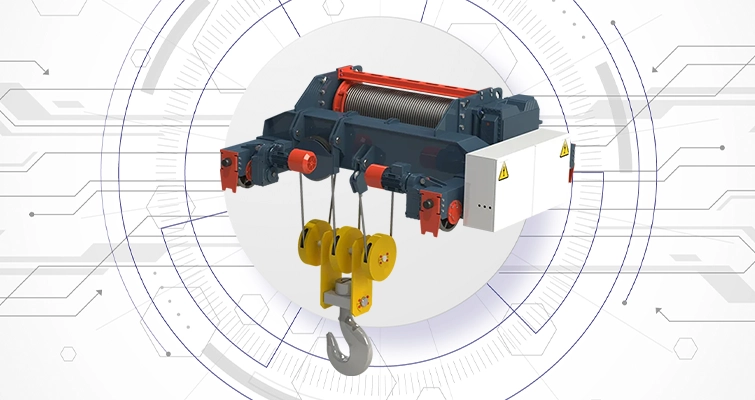
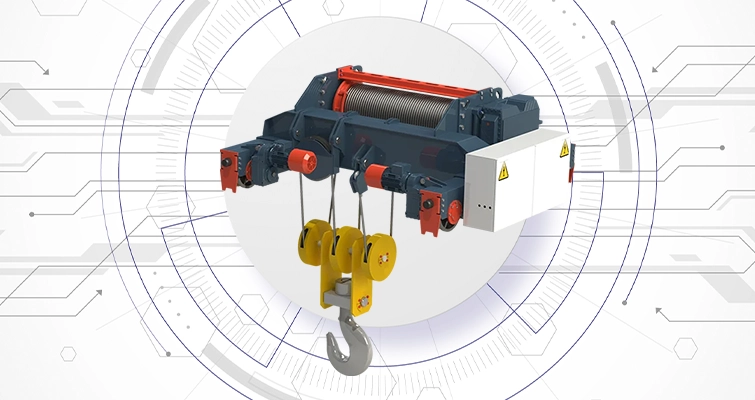
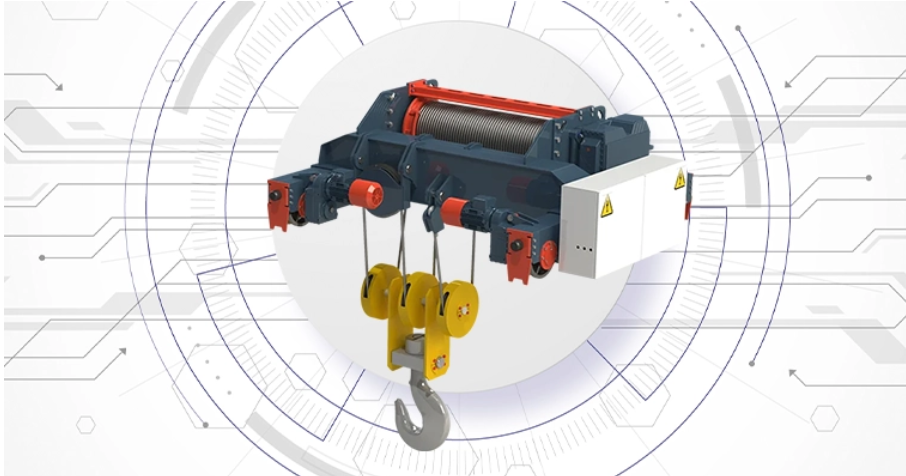
Why Should Industrial Crane Systems Be Designed Specifically for Each Project?
Why Should Industrial Crane Systems Be Designed Specifically for Each Project?
Safe, Efficient, and Long-Lasting Lifting Solutions for Industrial Facilities
In industrial production facilities, the safe and controlled handling of heavy loads is one of the most critical factors that directly affect operational efficiency. Whether it is a factory, workshop, warehouse, steel construction facility, machinery production line, or heavy industrial plant, the right crane system can significantly improve workflow, reduce labor intensity, and increase workplace safety.
Industrial crane systems should not be considered only as equipment used for lifting loads. A properly designed crane system improves production flow, supports occupational safety, reduces downtime, optimizes material handling, and contributes to the long-term value of an industrial investment.
Eser Vinç develops project-specific crane solutions for different industrial sectors with an engineering-oriented approach. With crane systems such as overhead travelling cranes, gantry cranes, jib cranes, and process cranes, Eser Vinç provides reliable lifting solutions designed according to the operational needs of each facility.
What Is an Industrial Crane System?
An industrial crane system is a mechanical and electrically controlled lifting solution used to lift, move, position, and transfer heavy loads within a defined working area. These systems are commonly used in factories, production plants, warehouses, assembly lines, steel manufacturing facilities, automotive plants, energy facilities, and heavy-duty industrial environments.
An industrial crane system generally consists of the following main components:
Hoisting unit
Bridge or supporting steel structure
Travelling mechanism
Trolley system
Motor and gearbox systems
Brake mechanisms
Electrical control panel
Remote or pendant control system
Limit switches and safety equipment
Each component must be selected according to the working conditions of the facility. Load capacity, daily operating intensity, building height, span, production flow, environmental conditions, and safety requirements are different for every project.
For this reason, a standard crane system may not always be the ideal solution for every facility. To achieve maximum efficiency and long service life, the crane must be designed with project-specific engineering calculations.
Why Choose a Project-Specific Crane Instead of a Standard Crane?
Every industrial facility has different load handling needs. For example, a crane used in a steel construction factory does not operate under the same conditions as a crane used in a machinery manufacturing plant. Similarly, a precast concrete facility, automotive supplier, energy plant, logistics center, or heavy industry workshop requires a different lifting solution.
With project-specific crane design, the system is planned according to the physical structure of the facility, required lifting capacity, operating frequency, operator usage habits, production layout, and safety expectations.
This approach provides several important advantages:
Safer load handling
More efficient production flow
Longer equipment service life
Lower maintenance costs
Reduced downtime
More accurate capacity utilization
Improved occupational safety standards
When investing in an industrial crane system, making a decision based only on price can lead to additional costs in the long term. The most important factor is to determine the right technical solution for the facility’s actual needs.
The First Criterion in Crane Selection: Lifting Capacity
The first factor to evaluate when choosing a crane system is lifting capacity. The maximum weight of the loads to be handled must be determined accurately. In addition to current production needs, future capacity increases should also be taken into consideration.
For example, a company that currently handles 5-ton loads may start manufacturing heavier equipment in the future. In such a case, a low-capacity crane system may become insufficient in a short time. On the other hand, choosing a crane with a much higher capacity than necessary may increase investment costs unnecessarily.
When determining lifting capacity, the following questions should be answered:
What is the maximum load weight?
How frequently will the load be handled?
What are the dimensions and center of gravity of the load?
How many hours will the crane operate daily?
Will production capacity increase in the future?
Will the crane work in one specific area or across a wider working zone?
When these criteria are analyzed correctly, businesses can invest in a crane system that is both safe and cost-effective.
Span and Lifting Height Must Be Calculated Correctly
In crane systems, span refers to the distance between the crane rails. Lifting height refers to how high the load can be lifted from the ground level. These two technical values directly affect the performance and usability of the crane system.
If the span is calculated incorrectly, the crane may not be able to cover the required working area efficiently. If the lifting height is insufficient, handling large components or positioning loads on production lines may become difficult.
For this reason, the facility layout must be examined carefully during the crane design process. Column positions, roof height, rail line, working area, machinery layout, and load transfer routes must be analyzed in detail.
Eser Vinç’s engineering-focused approach is based on evaluating these technical details correctly for each project. As a result, businesses receive not only a crane, but an integrated lifting solution that supports the entire production process.
Why Is FEM Working Class Important?
One of the most critical technical factors in industrial crane systems is the working class. The FEM working class defines the operating intensity and duty cycle of the crane.
A crane that lifts light loads a few times a day does not require the same working class as a crane that operates continuously on a production line. Choosing the wrong FEM class can reduce the mechanical service life of the crane and increase maintenance requirements.
In general, FEM classes can be evaluated as follows:
FEM 1m: Light-duty operation
FEM 2m: Medium-duty operation
FEM 3m: Heavy industrial operation
FEM 4m: Continuous and intensive operation
FEM class is especially important for steel plants, heavy industrial facilities, process lines, and continuously operating production plants. In these environments, the crane is not only a lifting device; it becomes one of the main systems that support uninterrupted production.
Overhead Travelling Crane Systems
Overhead travelling cranes are among the most widely used industrial lifting systems in factories and production facilities. Thanks to their bridge structure moving on rails, loads can be transported safely across a large working area.
These systems are commonly preferred in:
Steel construction manufacturing
Machinery manufacturing
Automotive industry
Energy facilities
Heavy industrial plants
Storage and shipment areas
Precast concrete production
Overhead travelling cranes can be designed as single girder or double girder systems. Single girder overhead travelling cranes offer an economical solution for light and medium-duty loads, while double girder overhead travelling cranes are preferred for high-capacity and heavy-duty applications.
Double girder systems provide higher lifting capacity, greater lifting height, and longer span capability. For this reason, they stand out as a powerful solution for heavy industrial facilities.
Gantry Crane Systems
Gantry cranes are powerful lifting systems commonly used for outdoor load handling operations. With their leg-supported structure moving on rails, gantry cranes are preferred in open storage areas, precast production sites, shipyards, heavy equipment yards, and outdoor industrial facilities.
Gantry crane systems offer a major advantage in open areas because they can operate without requiring a building structure. They improve efficiency in moving large and heavy components, loading and unloading operations, and internal logistics processes.
Depending on the project, gantry cranes can be designed as single girder or double girder systems. Lifting capacity, span, lifting height, and working class must be determined according to the operational needs of the business.
Jib Crane Systems
Jib cranes are ideal solutions for businesses that need local load handling within a specific working area. They are commonly used in workshops, assembly lines, maintenance areas, machine-side applications, and production support points.
Jib cranes provide operators with fast and practical handling capability. They help move small and medium-sized loads safely in limited spaces. With wall-mounted or floor-mounted options, they can adapt to different facility conditions.
Jib cranes are also frequently used as support systems for main overhead cranes. They improve speed, ergonomics, and efficiency in production lines.
Process Crane Systems
Process cranes are heavy-duty crane systems specially designed for continuously operating production lines. Unlike standard crane systems, they offer higher cycle capacity, stronger motor and gearbox systems, and advanced control infrastructure.
These cranes are commonly preferred in:
Iron and steel industry
Foundries
Energy facilities
Heavy machinery production
Continuous production lines
Industrial process plants
In process cranes, reliability, durability, and uninterrupted performance are the top priorities. Any downtime in these systems may directly lead to production loss. Therefore, when designing process cranes, not only lifting capacity but also operating frequency, environmental conditions, temperature, dust, humidity, shift system, and automation requirements must be considered.
Safety Systems Are Essential in Industrial Cranes
In industrial crane systems, safety is as important as technical performance. In production areas where heavy loads are handled, even a small error can cause serious workplace accidents and production losses.
Modern crane systems should include safety equipment such as:
Overload protection system
Limit switches
Emergency stop system
Brake system
Audible and visual warning systems
Anti-collision systems
Anti-sway technology
PLC-controlled safety infrastructure
Anti-sway technology reduces load swing and enables more controlled handling. PLC-controlled systems help manage crane movements more precisely and safely.
Eser Vinç evaluates safety, engineering, durability, and long-term performance together in its crane projects, offering reliable lifting solutions for industrial facilities.
Maintenance and Service in Crane Systems
Regular maintenance is essential for the long service life and safe operation of a crane system. Industrial cranes operate under demanding conditions and are exposed to intensive working cycles. Therefore, mechanical, electrical, and safety components must be checked periodically.
Regular maintenance provides several advantages:
Reduces the risk of breakdowns
Prevents production downtime
Extends equipment service life
Improves workplace safety
Keeps spare part costs under control
Prevents performance loss
During crane maintenance, wire rope, hook, brake, motor, gearbox, wheels, electrical panel, limit switches, and control systems should be inspected in detail.
A correct maintenance plan ensures that the crane investment can be used safely and efficiently for many years.
Factors Affecting Industrial Crane Prices
Industrial crane prices should not be evaluated through a fixed price list. Every project has different technical requirements. Therefore, crane pricing must be calculated on a project-specific basis.
The main factors affecting crane prices include:
Lifting capacity
Span measurement
Lifting height
Single girder or double girder design
FEM working class
Motor and gearbox selection
Automation level
Safety equipment
Installation conditions
Rail line requirements
Site conditions
Service and maintenance expectations
For accurate pricing, the technical needs of the facility must first be determined, followed by engineering calculations. This approach helps manage investment costs correctly and provides a more efficient long-term solution.
The Right Crane Project Design Process with Eser Vinç
Eser Vinç evaluates each industrial crane project according to the specific needs of the business. The project process is not limited to manufacturing; it includes discovery, analysis, engineering, design, production, installation, commissioning, and service support.
A proper crane project design process generally includes the following steps:
Needs analysis
Facility inspection
Determination of lifting capacity
Calculation of span and lifting height
Selection of FEM working class
Steel structure design
Selection of motor, gearbox, and safety equipment
Manufacturing process
Installation and commissioning
Service and maintenance support
Through this process, businesses receive not only lifting equipment but also a safe, efficient, and long-lasting system that supports production efficiency.
Why Choose Eser Vinç?
Eser Vinç provides project-specific industrial lifting solutions with an engineering-based production approach. With its production strength, technical knowledge, and experience in different sectors, Eser Vinç develops crane solutions for factories, production lines, and heavy industrial facilities.
Key advantages of Eser Vinç include:
Project-specific engineering approach
Overhead travelling crane solutions
Gantry crane systems
Jib crane solutions
Process crane design
Heavy-duty steel construction
PLC-controlled system options
Anti-sway technology
Safe and long-lasting design
Service and technical support across Turkey
An industrial crane investment is a long-term decision for businesses. Therefore, working with the right crane manufacturer is critical for safety, efficiency, and operational continuity.
Conclusion
Industrial crane systems are among the most important lifting and handling solutions for modern production facilities. A properly designed crane system accelerates production processes, strengthens occupational safety, reduces operational costs, and enables businesses to use their production capacity more efficiently.
For businesses that need overhead travelling cranes, gantry cranes, jib cranes, or process cranes, the right solution should be determined through a project-specific engineering approach. When lifting capacity, span, lifting height, FEM working class, safety equipment, and service processes are analyzed correctly, a crane investment becomes a strong production support system that can be used safely for many years.
Eser Vinç continues to provide safe, efficient, and long-lasting crane solutions for factories, production facilities, and heavy industrial plants with its engineering strength in industrial lifting systems.
For a new crane investment, modernization of an existing system, or a project-specific lifting solution, you can contact Eser Vinç to determine the most suitable crane system for your business.