




What Is a Tundish Crane?
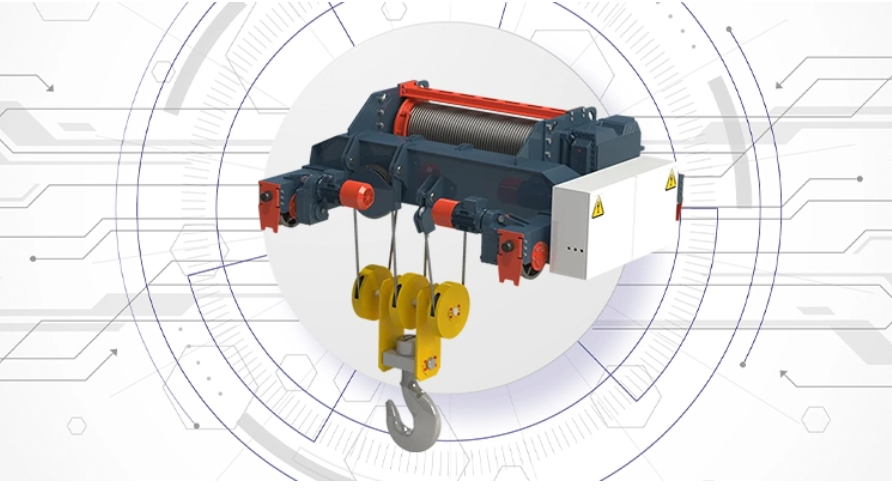
Product information
What Is a Tundish Crane?
A Tundish Crane is a special Process Crane designed to lift, transport and position tundish equipment used in steel plants, particularly in continuous casting lines.
A tundish is a refractory-lined intermediate vessel positioned between the ladle and the continuous casting mold. Instead of transferring molten steel directly from the ladle to the mold, the tundish acts as an intermediate reservoir that helps regulate the flow of molten steel and distribute it to one or more casting strands.
For this reason, a Tundish Handling Crane operates under conditions that are different from those of a standard factory lifting crane.
Depending on the production process, the tundish may need to be:
Transported between specific production points
Moved to a maintenance or preparation area
Positioned in the casting line
Replaced or transferred according to the production cycle
The crane used for these operations should therefore be engineered according to:
Tundish weight
Tundish geometry
Operating cycle
High-temperature environment
Process integration
EserVinç includes Tundish Cranes among its special process crane solutions alongside ladle cranes, charging cranes, billet cranes and scrap handling cranes.
Internal link: EserVinç Process (Special) Cranes
What Is a Tundish and What Does It Do in Continuous Casting?
A tundish is an intermediate vessel used in continuous casting to receive molten steel from the ladle and transfer it toward one or more casting molds in a controlled manner.
At a high level, the process can be represented as:
Ladle → Tundish → Continuous Casting Mold
The tundish acts as a buffer reservoir between the ladle and mold.
It helps maintain a more continuous metal flow during ladle changes and also supports distribution of molten steel to the casting strands.
For this reason, the tundish is not simply a large metal container.
It is an important piece of process equipment that directly affects continuous casting operations.
Therefore, the Tundish Handling Crane used to move it also becomes part of the production process.
Why Is a Tundish Crane Different from a Standard Overhead Crane?
A standard overhead crane or overhead bridge crane may be used for general-purpose operations such as:
Loading
Unloading
Maintenance
Assembly
Machine handling
A Tundish Crane, however, is a Process Crane designed around a repetitive and production-specific task.
For this reason, the project cannot be defined by asking only:
“How many tons does the tundish weigh?”
Other questions are equally important:
How many cycles are performed each day?
Along which route will the tundish travel?
What are the ambient temperature conditions?
Is the tundish transported empty or with process residue?
Where are the lifting points?
How precisely must it be positioned?
These parameters can directly affect the design of:
Hoisting Unit
Travelling Unit
Steel structure
Control system
Duty class
Is a Tundish Crane a Process Crane?
Yes.
A Tundish Crane is a typical Process Crane application.
Within EserVinç’s own product structure, process crane types include:
Ladle Cranes
Charging Cranes
Billet Handling Cranes
Tundish Cranes
Scrap Handling Cranes
Internal link: EserVinç Process Cranes
The main difference between a process crane and a general-purpose crane is that the process crane is directly linked to production.
An unplanned crane stoppage can therefore affect not only the crane itself, but the entire production operation connected to it.
For this reason, actual operating intensity becomes critical in Tundish Crane engineering.
What Is the Difference Between a Tundish Crane and a Ladle Crane?
These two crane types may be confused, but their functions are different.
Ladle Crane
A Ladle Crane is a specialized heavy-duty crane used for handling ladles associated with molten metal operations.
Tundish Crane
A Tundish Crane is used for tundish-related operations such as:
Transporting the tundish
Moving it to preparation areas
Bringing it to the process position
Replacing or transferring it when required
Although both the ladle and tundish are part of the same continuous casting process chain, they perform different functions.
Therefore:
Ladle Crane ≠ Tundish Crane
Both systems require separate engineering evaluation according to the real process conditions.
What Is the Difference Between a Tundish Crane and a Billet Handling Crane?
A Billet Handling Crane is used to transport steel billets created during steel production or continuous casting processes.
Billet cranes may use:
Magnets
Spreader beams
Fixed trolleys
Rotating trolleys
A Tundish Crane, however, does not handle the finished or semi-finished steel product.
It handles the tundish itself, which is part of the production equipment.
The load geometry and lifting scenario are therefore completely different.
Is a Tundish Crane the Same as a Scrap Handling Crane?
No.
A Scrap Handling Crane may use:
Magnets
Orange peel grabs
Buckets
to handle irregular scrap materials.
A Tundish Crane, by contrast, handles a process vessel with defined geometry and lifting points.
Therefore, scrap crane selection focuses strongly on material density and attachment type, while tundish crane engineering focuses more on:
Tundish geometry
Lifting points
Process route
Positioning requirements
How Is Tundish Crane Capacity Determined?
Tundish Crane capacity should not be selected only according to the empty weight of the tundish body.
Depending on the project, the total lifted load may include:
Tundish body
Refractory lining
Process residue
Lifting attachments
Spreader beam or special lifting device
For example:
“The empty tundish weighs 20 tons.”
is not necessarily enough information to select the crane capacity.
The more important value is:
the maximum real suspended load that can be applied to the crane hook during actual operation.
For this reason, the maximum operating scenario should be defined clearly before quotation.
Why Is Tundish Geometry Important?
Tundishes are not identical in every steel plant.
They may differ in:
Length
Width
Height
Lifting point arrangement
A large and long tundish may not be suitable for lifting from a single central point.
Depending on project requirements, a special:
Spreader beam
Lifting beam
Multi-point lifting arrangement
may be required.
The self-weight of this equipment must also be included in the total suspended load.
This directly affects Hoisting Unit selection.
Internal link: EserVinç Hoisting Units
How Is the Hoisting Unit Selected for a Tundish Crane?
The Hoisting Unit is the main machinery system that raises and lowers the load.
In a Tundish Crane project, the following should be evaluated together:
Total suspended load
Lifting height
Daily operating cycles
Duty class
Required speed characteristics
Environmental conditions
Especially in Process Cranes, the hoisting unit should not be selected according to capacity alone.
Two cranes with the same rated capacity may have completely different operating profiles.
One may be used only for occasional maintenance work.
The other may operate repeatedly as part of the production cycle.
Why Is Duty Class Important for a Tundish Crane?
A crane nameplate showing:
“30 tons capacity”
does not explain how intensively the crane operates.
A 30-ton crane may work:
Only a few times per week
while another 30-ton process crane may operate:
Repeatedly throughout every shift
For this reason, duty class affects the selection and operating conditions of components such as:
Motor
Gearbox
Brake
Wire rope
Drum
Wheel system
Because a Tundish Crane is part of the production process, the actual number of operating cycles should always be specified during quotation.
Why Is Precise Positioning Important on a Tundish Crane?
In process crane applications, the task is not always simply:
“Move the load from Point A to Point B.”
Large process equipment such as a tundish may need to be brought to certain production positions in a controlled manner.
For this reason:
Hoisting speed
Trolley speed
Bridge travelling speed
Acceleration
Deceleration
should be selected according to the operating scenario.
The goal is not simply fast transportation.
The goal is controlled positioning suitable for the process.
Can a VFD Be Used on a Tundish Crane?
Depending on the project, a VFD – Variable Frequency Drive may be used to control the acceleration and deceleration characteristics of crane motors.
In a suitable system, VFD control can support:
More controlled starting
More controlled deceleration
Management of appropriate movement speeds
However, a VFD does not correct:
Mechanical alignment problems
Incorrect rail geometry
Incorrect hoisting system design
The electrical and mechanical systems must be engineered together.
Why Is the Travelling Unit Important on a Tundish Crane?
A tundish is not only lifted vertically.
It may also need to be moved:
Along the crane bridge
Along the process line or production hall
These movements are carried out by the Travelling Units.
EserVinç defines Travelling Units as systems that allow crane bridges and related mechanisms to travel along fixed rails.
Internal link: EserVinç Travelling Units
In a Tundish Crane, the following should be evaluated as one system:
Wheel system
Motor-gearbox
Rail system
Brakes
Motion control
Can a Tundish Crane Be Single Girder?
It would not be technically correct to say:
“Every Tundish Crane must be double girder.”
The crane structure should be selected according to:
Capacity
Span
Lifting height
Duty class
Lifting attachment dimensions
Process requirements
However, in process applications involving high capacity, high duty class or special trolley requirements, a double girder overhead bridge crane architecture may offer important advantages.
EserVinç’s product family includes both Single Girder and Double Girder Overhead Bridge Cranes.
Internal link: EserVinç Overhead Bridge Cranes
Is a Tundish Crane an Overhead Crane?
In terms of crane architecture, some Tundish Cranes can be designed according to the overhead bridge crane principle.
However, not every overhead bridge crane is a Tundish Crane.
The main difference is the process function.
A standard overhead crane can perform general factory handling tasks.
A Tundish Crane is engineered for a specific continuous casting process requirement.
It is therefore more accurate to think of the distinction as:
Overhead Crane → General crane architecture
Tundish Crane → Process-specific crane function
Why Is Ambient Temperature Important for a Tundish Crane?
Steel plants and continuous casting facilities can have environmental conditions that are significantly different from standard machine factories.
Crane equipment may be exposed to:
Heat
Dust
Intensive industrial operation
Process-related environmental effects
For this reason, motors, electrical equipment, cables, control systems and mechanical components should be evaluated according to actual plant conditions.
Simply stating:
“The crane will work indoors.”
is not sufficient.
The environmental conditions should be defined in more detail.
How Should the Brake System Be Evaluated on a Tundish Crane?
The brake system is a critical mechanical and control component in hoisting operations.
However, it would not be correct to state a universal rule such as:
“Every Tundish Crane must use this specific dual-brake system.”
Brake architecture should be determined according to:
Load
Duty class
Risk assessment
Applicable standards
Process criticality
Especially in plants associated with molten metal processes, safety architecture requires project-specific engineering evaluation.
Is Redundancy Required on a Tundish Crane?
This cannot be answered the same way for every project.
For critical applications, different levels of redundancy may be evaluated in areas such as:
Brake architecture
Control system
Electrical infrastructure
Monitoring systems
However, the correct approach is not:
“It is a process crane, so everything must be duplicated.”
The required safety level should instead be determined according to:
Risk analysis
Applicable technical requirements
Actual process conditions
Operator Cabin or Radio Remote Control?
The control system should be selected according to the working environment.
Depending on the project, the following may be considered:
Operator cabin
Pendant control
Radio remote control
Automation-supported control
The operator should be able to:
See the load
Monitor the movement area
Observe critical process points
In steel plant environments, operator position may require additional project-specific evaluation.
Can a Tundish Crane Be Integrated with Automation?
Depending on process requirements, the crane control system may be integrated with plant automation.
Information such as:
Position
Load
Operating status
Alarm data
can potentially be transferred to production management or control systems.
However, fully automatic operation is not necessary for every Tundish Crane.
The automation level should be selected according to:
Process requirement + safety requirement + operating model
Can Tundish Crane Capacity Be Increased?
Increasing crane capacity does not mean simply replacing the hoisting motor.
If a capacity upgrade is planned, the following should be re-evaluated:
Main bridge
Hoisting unit
Gearbox
Brake
Wire rope
Drum
Hook or lifting attachment
Wheels
Rails
Building supporting structure
Especially on a Process Crane, increasing capacity may also change the crane’s overall duty profile.
Can a Tundish Crane Be Modernized?
Yes.
Existing Tundish Cranes can be modernized following technical assessment.
Depending on project requirements, modernization may include:
Electrical panel
VFD
Motor-gearbox
Brakes
Control system
Radio remote control
Hoisting unit
Travelling unit
However, modernization should not simply mean replacing old components with new ones.
The project should first ask:
Have the operating conditions changed?
Has the cycle rate increased?
Has tundish geometry or weight changed?
Has the production line been upgraded?
These questions help define the correct modernization scope.
What Determines Tundish Crane Prices?
There is no single standard Tundish Crane price.
Main cost factors may include:
Lifting capacity
Bridge span
Lifting height
Duty class
Tundish geometry
Special lifting attachment
Hoisting unit
Travelling unit
Control system
Automation level
Operating environment
Project-specific safety requirements
For this reason, the question:
“How much does a 30-ton Tundish Crane cost?”
cannot be answered accurately from tonnage alone.
What Information Is Required for a Tundish Crane Quotation?
For a correct technical evaluation, the following information should be prepared:
Maximum Tundish Weight
What is the maximum total load under real operating conditions?
Tundish Dimensions
What are the length, width and height?
Lifting Points
From which points will the tundish be lifted?
Crane Span
What bridge span is required between the runways?
Lifting Height
What are the lowest and highest operating elevations?
Transfer Route
Between which points will the tundish be moved?
Number of Cycles
What is the hourly, daily and shift-based operating intensity?
Working Environment
What are the heat, dust and other industrial conditions?
Control Requirement
Is a cabin, radio remote control or another control concept required?
Process Integration
Will the crane be integrated with other production systems for automation or data exchange?
These details allow the Tundish Crane to be engineered according to the real process rather than capacity alone.
Most Common Mistakes When Selecting a Tundish Crane
Common mistakes include:
Considering only empty tundish weight
Ignoring lifting attachment weight
Failing to specify operating cycles
Treating a process crane like a general-purpose crane
Not providing tundish geometry
Ignoring ambient temperature
Considering precise positioning only after installation
Designing rails and travelling systems independently from the crane
Comparing quotations only by total price
The correct approach is to evaluate the crane as part of the production process.
EserVinç Tundish Crane and Process Crane Solutions
Within EserVinç’s official product structure, Process (Special) Cranes are positioned as project-specific crane systems for production lines, heavy-duty material handling and industrial process operations.
Tundish Cranes are included alongside:
Ladle Cranes
Charging Cranes
Billet Handling Cranes
Scrap Handling Cranes
as part of EserVinç’s process crane product family.
EserVinç Internal Links
This internal linking structure allows the new Tundish Crane article to support not only the primary keyword but also EserVinç’s broader Process Crane, Overhead Bridge Crane, Hoisting Unit and Travelling Unit topic clusters.
Frequently Asked Questions
What is a Tundish Crane?
A Tundish Crane is a special Process Crane used to lift, transport and position tundish equipment in continuous casting facilities.
What is a tundish?
A tundish is a refractory-lined intermediate vessel used between the ladle and the continuous casting mold to help regulate and distribute molten steel flow.
Is a Tundish Crane the same as a Ladle Crane?
No. A Ladle Crane is designed for ladle handling, while a Tundish Crane is designed specifically for tundish handling and positioning.
Is a Tundish Crane an overhead crane?
Some Tundish Cranes may use an overhead bridge crane architecture, but “Tundish Crane” describes the process-specific function rather than only the structural type.
How is Tundish Crane capacity determined?
The maximum actual operating load, tundish weight, lifting attachment weight and process conditions should all be evaluated together.
Does a Tundish Crane have to be double girder?
No. Girder configuration depends on capacity, span, duty class, lifting height and process requirements.
Can a special lifting attachment be used on a Tundish Crane?
Yes. Depending on tundish geometry and lifting points, special spreader beams or other project-specific lifting solutions may be used.
Why is duty class important on a Tundish Crane?
Because operating cycles directly affect the working conditions of motors, gearboxes, brakes, wire ropes and other components.
Can a Tundish Crane be automated?
Depending on process and safety requirements, certain automation and control functions may be integrated.
How are Tundish Crane prices determined?
Price depends on capacity, span, lifting height, duty class, hoisting and travelling systems, control architecture and environmental conditions.
The Right Question Is Not Only “How Many Tons?” but “For Which Process?”
In a Tundish Crane project, simply stating:
“The tundish weighs 25 tons.”
is not enough.
Proper engineering should also define:
What is the maximum actual tundish weight?
What are its dimensions?
Where will it be lifted from?
How far will it travel?
How many cycles will be performed each day?
What are the environmental conditions?
How precisely must it be positioned?
What hoisting and travelling speeds are required?
How will the crane interact with the production line?
Because a Tundish Crane is not a standard load-handling machine.
It is a Process Crane that should be engineered according to the specific operating requirements of continuous casting and steel plant processes.
Within EserVinç’s product portfolio, Tundish Cranes are positioned together with other special steel mill and process crane solutions. EserVinç also offers Hoisting Units, Travelling Units and Overhead Bridge Crane systems for project-specific industrial lifting requirements.
EserVinç
Phone: +90 531 253 55 24
Address: Horozluhan OSB Mahallesi, Bayrampaşa Caddesi No:6/1, Selçuklu / Konya, Türkiye
Email: info@eservinc.com

Technical Features
Technical Dimensions
What Is a Tundish Crane?
A Tundish Crane is a special Process Crane designed to lift, transport and position tundish equipment used in steel plants, particularly in continuous casting lines.
A tundish is a refractory-lined intermediate vessel positioned between the ladle and the continuous casting mold. Instead of transferring molten steel directly from the ladle to the mold, the tundish acts as an intermediate reservoir that helps regulate the flow of molten steel and distribute it to one or more casting strands.
For this reason, a Tundish Handling Crane operates under conditions that are different from those of a standard factory lifting crane.
Depending on the production process, the tundish may need to be:
Transported between specific production points
Moved to a maintenance or preparation area
Positioned in the casting line
Replaced or transferred according to the production cycle
The crane used for these operations should therefore be engineered according to:
Tundish weight
Tundish geometry
Operating cycle
High-temperature environment
Process integration
EserVinç includes Tundish Cranes among its special process crane solutions alongside ladle cranes, charging cranes, billet cranes and scrap handling cranes.
Internal link: EserVinç Process (Special) Cranes
What Is a Tundish and What Does It Do in Continuous Casting?
A tundish is an intermediate vessel used in continuous casting to receive molten steel from the ladle and transfer it toward one or more casting molds in a controlled manner.
At a high level, the process can be represented as:
Ladle → Tundish → Continuous Casting Mold
The tundish acts as a buffer reservoir between the ladle and mold.
It helps maintain a more continuous metal flow during ladle changes and also supports distribution of molten steel to the casting strands.
For this reason, the tundish is not simply a large metal container.
It is an important piece of process equipment that directly affects continuous casting operations.
Therefore, the Tundish Handling Crane used to move it also becomes part of the production process.
Why Is a Tundish Crane Different from a Standard Overhead Crane?
A standard overhead crane or overhead bridge crane may be used for general-purpose operations such as:
Loading
Unloading
Maintenance
Assembly
Machine handling
A Tundish Crane, however, is a Process Crane designed around a repetitive and production-specific task.
For this reason, the project cannot be defined by asking only:
“How many tons does the tundish weigh?”
Other questions are equally important:
How many cycles are performed each day?
Along which route will the tundish travel?
What are the ambient temperature conditions?
Is the tundish transported empty or with process residue?
Where are the lifting points?
How precisely must it be positioned?
These parameters can directly affect the design of:
Hoisting Unit
Travelling Unit
Steel structure
Control system
Duty class
Is a Tundish Crane a Process Crane?
Yes.
A Tundish Crane is a typical Process Crane application.
Within EserVinç’s own product structure, process crane types include:
Ladle Cranes
Charging Cranes
Billet Handling Cranes
Tundish Cranes
Scrap Handling Cranes
Internal link: EserVinç Process Cranes
The main difference between a process crane and a general-purpose crane is that the process crane is directly linked to production.
An unplanned crane stoppage can therefore affect not only the crane itself, but the entire production operation connected to it.
For this reason, actual operating intensity becomes critical in Tundish Crane engineering.
What Is the Difference Between a Tundish Crane and a Ladle Crane?
These two crane types may be confused, but their functions are different.
Ladle Crane
A Ladle Crane is a specialized heavy-duty crane used for handling ladles associated with molten metal operations.
Tundish Crane
A Tundish Crane is used for tundish-related operations such as:
Transporting the tundish
Moving it to preparation areas
Bringing it to the process position
Replacing or transferring it when required
Although both the ladle and tundish are part of the same continuous casting process chain, they perform different functions.
Therefore:
Ladle Crane ≠ Tundish Crane
Both systems require separate engineering evaluation according to the real process conditions.
What Is the Difference Between a Tundish Crane and a Billet Handling Crane?
A Billet Handling Crane is used to transport steel billets created during steel production or continuous casting processes.
Billet cranes may use:
Magnets
Spreader beams
Fixed trolleys
Rotating trolleys
A Tundish Crane, however, does not handle the finished or semi-finished steel product.
It handles the tundish itself, which is part of the production equipment.
The load geometry and lifting scenario are therefore completely different.
Is a Tundish Crane the Same as a Scrap Handling Crane?
No.
A Scrap Handling Crane may use:
Magnets
Orange peel grabs
Buckets
to handle irregular scrap materials.
A Tundish Crane, by contrast, handles a process vessel with defined geometry and lifting points.
Therefore, scrap crane selection focuses strongly on material density and attachment type, while tundish crane engineering focuses more on:
Tundish geometry
Lifting points
Process route
Positioning requirements
How Is Tundish Crane Capacity Determined?
Tundish Crane capacity should not be selected only according to the empty weight of the tundish body.
Depending on the project, the total lifted load may include:
Tundish body
Refractory lining
Process residue
Lifting attachments
Spreader beam or special lifting device
For example:
“The empty tundish weighs 20 tons.”
is not necessarily enough information to select the crane capacity.
The more important value is:
the maximum real suspended load that can be applied to the crane hook during actual operation.
For this reason, the maximum operating scenario should be defined clearly before quotation.
Why Is Tundish Geometry Important?
Tundishes are not identical in every steel plant.
They may differ in:
Length
Width
Height
Lifting point arrangement
A large and long tundish may not be suitable for lifting from a single central point.
Depending on project requirements, a special:
Spreader beam
Lifting beam
Multi-point lifting arrangement
may be required.
The self-weight of this equipment must also be included in the total suspended load.
This directly affects Hoisting Unit selection.
Internal link: EserVinç Hoisting Units
How Is the Hoisting Unit Selected for a Tundish Crane?
The Hoisting Unit is the main machinery system that raises and lowers the load.
In a Tundish Crane project, the following should be evaluated together:
Total suspended load
Lifting height
Daily operating cycles
Duty class
Required speed characteristics
Environmental conditions
Especially in Process Cranes, the hoisting unit should not be selected according to capacity alone.
Two cranes with the same rated capacity may have completely different operating profiles.
One may be used only for occasional maintenance work.
The other may operate repeatedly as part of the production cycle.
Why Is Duty Class Important for a Tundish Crane?
A crane nameplate showing:
“30 tons capacity”
does not explain how intensively the crane operates.
A 30-ton crane may work:
Only a few times per week
while another 30-ton process crane may operate:
Repeatedly throughout every shift
For this reason, duty class affects the selection and operating conditions of components such as:
Motor
Gearbox
Brake
Wire rope
Drum
Wheel system
Because a Tundish Crane is part of the production process, the actual number of operating cycles should always be specified during quotation.
Why Is Precise Positioning Important on a Tundish Crane?
In process crane applications, the task is not always simply:
“Move the load from Point A to Point B.”
Large process equipment such as a tundish may need to be brought to certain production positions in a controlled manner.
For this reason:
Hoisting speed
Trolley speed
Bridge travelling speed
Acceleration
Deceleration
should be selected according to the operating scenario.
The goal is not simply fast transportation.
The goal is controlled positioning suitable for the process.
Can a VFD Be Used on a Tundish Crane?
Depending on the project, a VFD – Variable Frequency Drive may be used to control the acceleration and deceleration characteristics of crane motors.
In a suitable system, VFD control can support:
More controlled starting
More controlled deceleration
Management of appropriate movement speeds
However, a VFD does not correct:
Mechanical alignment problems
Incorrect rail geometry
Incorrect hoisting system design
The electrical and mechanical systems must be engineered together.
Why Is the Travelling Unit Important on a Tundish Crane?
A tundish is not only lifted vertically.
It may also need to be moved:
Along the crane bridge
Along the process line or production hall
These movements are carried out by the Travelling Units.
EserVinç defines Travelling Units as systems that allow crane bridges and related mechanisms to travel along fixed rails.
Internal link: EserVinç Travelling Units
In a Tundish Crane, the following should be evaluated as one system:
Wheel system
Motor-gearbox
Rail system
Brakes
Motion control
Can a Tundish Crane Be Single Girder?
It would not be technically correct to say:
“Every Tundish Crane must be double girder.”
The crane structure should be selected according to:
Capacity
Span
Lifting height
Duty class
Lifting attachment dimensions
Process requirements
However, in process applications involving high capacity, high duty class or special trolley requirements, a double girder overhead bridge crane architecture may offer important advantages.
EserVinç’s product family includes both Single Girder and Double Girder Overhead Bridge Cranes.
Internal link: EserVinç Overhead Bridge Cranes
Is a Tundish Crane an Overhead Crane?
In terms of crane architecture, some Tundish Cranes can be designed according to the overhead bridge crane principle.
However, not every overhead bridge crane is a Tundish Crane.
The main difference is the process function.
A standard overhead crane can perform general factory handling tasks.
A Tundish Crane is engineered for a specific continuous casting process requirement.
It is therefore more accurate to think of the distinction as:
Overhead Crane → General crane architecture
Tundish Crane → Process-specific crane function
Why Is Ambient Temperature Important for a Tundish Crane?
Steel plants and continuous casting facilities can have environmental conditions that are significantly different from standard machine factories.
Crane equipment may be exposed to:
Heat
Dust
Intensive industrial operation
Process-related environmental effects
For this reason, motors, electrical equipment, cables, control systems and mechanical components should be evaluated according to actual plant conditions.
Simply stating:
“The crane will work indoors.”
is not sufficient.
The environmental conditions should be defined in more detail.
How Should the Brake System Be Evaluated on a Tundish Crane?
The brake system is a critical mechanical and control component in hoisting operations.
However, it would not be correct to state a universal rule such as:
“Every Tundish Crane must use this specific dual-brake system.”
Brake architecture should be determined according to:
Load
Duty class
Risk assessment
Applicable standards
Process criticality
Especially in plants associated with molten metal processes, safety architecture requires project-specific engineering evaluation.
Is Redundancy Required on a Tundish Crane?
This cannot be answered the same way for every project.
For critical applications, different levels of redundancy may be evaluated in areas such as:
Brake architecture
Control system
Electrical infrastructure
Monitoring systems
However, the correct approach is not:
“It is a process crane, so everything must be duplicated.”
The required safety level should instead be determined according to:
Risk analysis
Applicable technical requirements
Actual process conditions
Operator Cabin or Radio Remote Control?
The control system should be selected according to the working environment.
Depending on the project, the following may be considered:
Operator cabin
Pendant control
Radio remote control
Automation-supported control
The operator should be able to:
See the load
Monitor the movement area
Observe critical process points
In steel plant environments, operator position may require additional project-specific evaluation.
Can a Tundish Crane Be Integrated with Automation?
Depending on process requirements, the crane control system may be integrated with plant automation.
Information such as:
Position
Load
Operating status
Alarm data
can potentially be transferred to production management or control systems.
However, fully automatic operation is not necessary for every Tundish Crane.
The automation level should be selected according to:
Process requirement + safety requirement + operating model
Can Tundish Crane Capacity Be Increased?
Increasing crane capacity does not mean simply replacing the hoisting motor.
If a capacity upgrade is planned, the following should be re-evaluated:
Main bridge
Hoisting unit
Gearbox
Brake
Wire rope
Drum
Hook or lifting attachment
Wheels
Rails
Building supporting structure
Especially on a Process Crane, increasing capacity may also change the crane’s overall duty profile.
Can a Tundish Crane Be Modernized?
Yes.
Existing Tundish Cranes can be modernized following technical assessment.
Depending on project requirements, modernization may include:
Electrical panel
VFD
Motor-gearbox
Brakes
Control system
Radio remote control
Hoisting unit
Travelling unit
However, modernization should not simply mean replacing old components with new ones.
The project should first ask:
Have the operating conditions changed?
Has the cycle rate increased?
Has tundish geometry or weight changed?
Has the production line been upgraded?
These questions help define the correct modernization scope.
What Determines Tundish Crane Prices?
There is no single standard Tundish Crane price.
Main cost factors may include:
Lifting capacity
Bridge span
Lifting height
Duty class
Tundish geometry
Special lifting attachment
Hoisting unit
Travelling unit
Control system
Automation level
Operating environment
Project-specific safety requirements
For this reason, the question:
“How much does a 30-ton Tundish Crane cost?”
cannot be answered accurately from tonnage alone.
What Information Is Required for a Tundish Crane Quotation?
For a correct technical evaluation, the following information should be prepared:
Maximum Tundish Weight
What is the maximum total load under real operating conditions?
Tundish Dimensions
What are the length, width and height?
Lifting Points
From which points will the tundish be lifted?
Crane Span
What bridge span is required between the runways?
Lifting Height
What are the lowest and highest operating elevations?
Transfer Route
Between which points will the tundish be moved?
Number of Cycles
What is the hourly, daily and shift-based operating intensity?
Working Environment
What are the heat, dust and other industrial conditions?
Control Requirement
Is a cabin, radio remote control or another control concept required?
Process Integration
Will the crane be integrated with other production systems for automation or data exchange?
These details allow the Tundish Crane to be engineered according to the real process rather than capacity alone.
Most Common Mistakes When Selecting a Tundish Crane
Common mistakes include:
Considering only empty tundish weight
Ignoring lifting attachment weight
Failing to specify operating cycles
Treating a process crane like a general-purpose crane
Not providing tundish geometry
Ignoring ambient temperature
Considering precise positioning only after installation
Designing rails and travelling systems independently from the crane
Comparing quotations only by total price
The correct approach is to evaluate the crane as part of the production process.
EserVinç Tundish Crane and Process Crane Solutions
Within EserVinç’s official product structure, Process (Special) Cranes are positioned as project-specific crane systems for production lines, heavy-duty material handling and industrial process operations.
Tundish Cranes are included alongside:
Ladle Cranes
Charging Cranes
Billet Handling Cranes
Scrap Handling Cranes
as part of EserVinç’s process crane product family.
EserVinç Internal Links
This internal linking structure allows the new Tundish Crane article to support not only the primary keyword but also EserVinç’s broader Process Crane, Overhead Bridge Crane, Hoisting Unit and Travelling Unit topic clusters.
Frequently Asked Questions
What is a Tundish Crane?
A Tundish Crane is a special Process Crane used to lift, transport and position tundish equipment in continuous casting facilities.
What is a tundish?
A tundish is a refractory-lined intermediate vessel used between the ladle and the continuous casting mold to help regulate and distribute molten steel flow.
Is a Tundish Crane the same as a Ladle Crane?
No. A Ladle Crane is designed for ladle handling, while a Tundish Crane is designed specifically for tundish handling and positioning.
Is a Tundish Crane an overhead crane?
Some Tundish Cranes may use an overhead bridge crane architecture, but “Tundish Crane” describes the process-specific function rather than only the structural type.
How is Tundish Crane capacity determined?
The maximum actual operating load, tundish weight, lifting attachment weight and process conditions should all be evaluated together.
Does a Tundish Crane have to be double girder?
No. Girder configuration depends on capacity, span, duty class, lifting height and process requirements.
Can a special lifting attachment be used on a Tundish Crane?
Yes. Depending on tundish geometry and lifting points, special spreader beams or other project-specific lifting solutions may be used.
Why is duty class important on a Tundish Crane?
Because operating cycles directly affect the working conditions of motors, gearboxes, brakes, wire ropes and other components.
Can a Tundish Crane be automated?
Depending on process and safety requirements, certain automation and control functions may be integrated.
How are Tundish Crane prices determined?
Price depends on capacity, span, lifting height, duty class, hoisting and travelling systems, control architecture and environmental conditions.
The Right Question Is Not Only “How Many Tons?” but “For Which Process?”
In a Tundish Crane project, simply stating:
“The tundish weighs 25 tons.”
is not enough.
Proper engineering should also define:
What is the maximum actual tundish weight?
What are its dimensions?
Where will it be lifted from?
How far will it travel?
How many cycles will be performed each day?
What are the environmental conditions?
How precisely must it be positioned?
What hoisting and travelling speeds are required?
How will the crane interact with the production line?
Because a Tundish Crane is not a standard load-handling machine.
It is a Process Crane that should be engineered according to the specific operating requirements of continuous casting and steel plant processes.
Within EserVinç’s product portfolio, Tundish Cranes are positioned together with other special steel mill and process crane solutions. EserVinç also offers Hoisting Units, Travelling Units and Overhead Bridge Crane systems for project-specific industrial lifting requirements.
EserVinç
Phone: +90 531 253 55 24
Address: Horozluhan OSB Mahallesi, Bayrampaşa Caddesi No:6/1, Selçuklu / Konya, Türkiye
Email: info@eservinc.com