




What Is Below-the-Hook Equipment on an Overhead Bridge Crane?
Product information
What Is Below-the-Hook Equipment on an Overhead Bridge Crane?
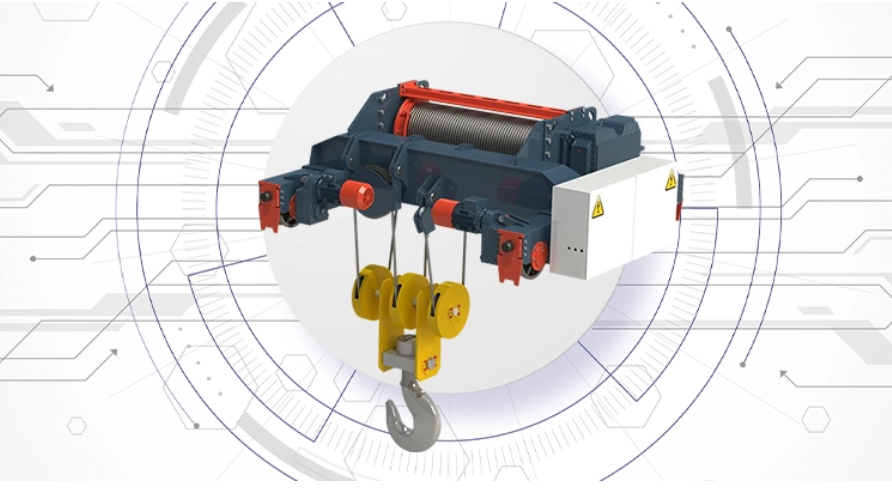
An Overhead Bridge Crane is not simply a lifting system made up of a bridge, hoisting unit and standard hook.
In many factories, the component that actually determines how the crane performs its real production task is the special lifting equipment installed below the hook.
These systems are generally referred to as:
Below-the-hook equipment
Lifting attachments
Load handling devices
Within EserVinç’s Overhead Bridge Crane product family, different below-the-hook solutions such as magnets, lifting beams, orange peel grabs, slab tongs, buckets, C-hooks and marble slab lifting attachments are explicitly listed for different industrial processes.
Internal link: Overhead Bridge Cranes
The purpose of these attachments is not to increase crane capacity.
Their purpose is to create a lifting connection suitable for the load’s:
Geometry
Center of gravity
Surface condition
Length
Handling direction
Production process
For this reason, the same 10-ton overhead bridge crane can perform completely different tasks depending on the below-the-hook equipment used.
Why Is Below-the-Hook Equipment So Important?
A standard hook does not mean that every type of load can be lifted safely and efficiently.
For example, lifting a 10-meter-long steel structure from a single point is very different from lifting a compact machine component.
Likewise, the following loads cannot all be handled with the same device:
Steel coil
Sheet plate
Scrap
Marble slab
Steel billet
Bulk material
For this reason, a crane investment should not begin only with the question:
“What lifting capacity do we need?”
It should also answer:
“How will we actually grip and handle the load?”
Does Below-the-Hook Equipment Affect Crane Capacity?
Yes.
Crane capacity calculations should include the total suspended load at the hook.
For example:
Product weight: 8 tons
Spreader beam: 1.2 tons
Slings and connection equipment: 300 kg
The total suspended load becomes approximately 9.5 tons.
Therefore, selecting crane capacity only according to the net weight of the product is not correct.
EserVinç’s existing crane capacity guide also emphasizes that lifting attachments, spreader beams, electromagnets and other below-the-hook devices must be included in the total suspended load calculation.
Internal link: How Is Overhead Bridge Crane Capacity Determined?
What Is a Spreader Beam?
A spreader beam is lifting equipment used for loads that are long or require multiple lifting points.
In international terminology, the following terms are commonly used:
Lifting Beam
Spreader Beam
A spreader beam allows the load to be lifted from several designed points rather than one central point.
This can be especially important for:
Steel structures
Long machine frames
Profiles
Pipes
Precast concrete components
Long steel plates or billets
Why Is a Spreader Beam Used with an Overhead Bridge Crane?
If a long load is lifted only from its center point, it may:
Become unstable
Bend
Rotate
Create undesirable sling angles
A spreader beam helps distribute the lifting points more appropriately across the load.
However, the weight of the spreader beam itself must also be included in the crane capacity calculation.
If a heavy-duty spreader beam is used, the remaining usable payload capacity can decrease significantly.
For this reason, the spreader beam should not be treated as an accessory selected only after the crane has already been designed.
How Is Spreader Beam Length Selected?
Spreader beam selection should consider:
Minimum load length
Maximum load length
Load weight
Center of gravity
Lifting points
Sling angles
Lifting height
For example, in a factory that manufactures steel structures in different lengths, designing one fixed spreader beam for only one product dimension may reduce operational flexibility.
In some projects, adjustable lifting points may be evaluated.
What Is a C-Hook?
A C-Hook is a special lifting attachment named after its C-shaped geometry and is commonly used for handling coils and rolls.
For loads such as steel coils, which have a central opening, the lifting arm of the C-hook enters the coil eye.
This allows the coil to be:
Picked up
Lifted
Transported
Positioned in storage
C-hooks are commonly considered in:
Steel service centers
Sheet metal production plants
Coil storage areas
Metal processing facilities
EserVinç lists C-hooks among the below-the-hook equipment options used with Overhead Bridge Cranes.
What Information Is Required for C-Hook Selection?
Coil weight alone is not sufficient.
The following dimensions are also important:
Maximum coil weight
Coil inner diameter
Coil outer diameter
Coil width
Center of gravity
Storage arrangement
The self-weight of the C-hook must also be included in the crane capacity calculation.
In addition, the structural height of the C-hook can reduce usable lifting height.
What Is a Magnetic Overhead Bridge Crane?
A magnetic overhead bridge crane is a system that handles suitable ferromagnetic loads using electromagnets or other project-specific magnetic lifting devices.
Magnetic lifting systems can be considered for:
Steel plates
Steel sheets
Steel profiles
Billets
Scrap
Ferromagnetic production components
In some applications, magnets can reduce the need for repeated manual slinging.
However, not every metal can be handled magnetically.
Material properties and actual operating conditions must always be evaluated.
How Is the Number of Magnets Determined?
A single magnet may not be sufficient for long steel products.
In this case, multiple magnets can be distributed along a lifting beam.
Selection should consider:
Load length
Material thickness
Load geometry
Weight
Magnet contact area
Number of products lifted simultaneously
Especially in process applications, the magnet and spreader system should be engineered together with the crane’s hoisting unit.
EserVinç’s Process Crane product family also includes magnetic billet and scrap crane applications.
Internal link: Process (Special) Cranes
What Is an Orange Peel Grab Crane?
An orange peel grab is a multi-tine mechanical gripping device used to physically capture irregular materials.
International terminology may include:
Orange Peel Grab
Claw Grab
Multi-Tine Grab
Orange peel grabs are particularly suitable for:
Scrap
Mixed metal
Irregular materials
Large interlocked pieces
Unlike magnets, the grab does not rely on magnetic force. It physically grips the material.
Magnet or Orange Peel Grab?
The answer depends entirely on the material.
For ferromagnetic steel scrap that can be handled magnetically, a magnet may offer advantages.
However, if the material includes:
Mixed materials
Non-magnetic components
Large irregular pieces
an orange peel grab may be more suitable.
Therefore, general assumptions such as:
“Magnets are faster, so we should use a magnet.”
or
“A grab can handle every type of scrap.”
should be avoided.
The actual scrap composition must be analyzed.
What Is a Bucket Overhead Bridge Crane?
Bucket systems can be used for handling bulk materials.
Bucket design may depend on:
Particle size
Material density
Flow characteristics
Moisture content
Storage method
The bucket’s own weight must also be included in the total lifted load.
EserVinç also lists buckets among the special below-the-hook equipment that can be used with Overhead Bridge Cranes.
What Is a Slab Tong?
A Slab Tong is a special mechanical lifting device designed to grip slabs or large steel plate-type products.
Especially in the iron and steel sector, attachment geometry can be affected by:
Width
Thickness
Weight
Surface condition
These systems should not be treated as simple hook accessories. The load and crane must be evaluated together as one system.
What Is a Marble Slab Lifting Attachment?
In natural stone and marble operations, load geometry is very different from metal industry applications.
Marble slabs may require special handling due to:
Fragility
Large surface area
Thickness
Handling orientation
EserVinç also lists marble slab lifting attachments among the special below-the-hook equipment used with Overhead Bridge Cranes.
For this reason, in natural stone applications, the crane’s lifting capacity alone is not enough. The lifting device itself is a core part of the project.
Does Below-the-Hook Equipment Reduce Lifting Height?
Yes.
A spreader beam, C-hook, magnet, grab or another attachment creates additional structural height between the crane hook and the load.
For example:
The maximum hook height may be 8 meters.
If the attachment itself has a structural height of 1.5 meters, the actual upper position of the load will be lower.
For this reason, below-the-hook equipment should be considered during the original crane design phase.
EserVinç’s lifting height guide also explains that spreader beams, magnets, C-hooks and other lifting devices can reduce usable lifting height.
Internal link: How Is Lifting Height Determined on Overhead Bridge Cranes?
Single Girder or Double Girder: Which Is Better for Special Attachments?
There is no single answer.
The decision depends on:
Total suspended load
Span
Lifting height
Attachment dimensions
Duty class
Daily operating cycles
Hook approach requirement
For higher capacities or heavy attachments, a double girder crane may provide advantages.
However, not every magnetic crane or crane with a spreader beam automatically requires a double girder configuration.
EserVinç’s Overhead Bridge Crane family includes both Single Girder and Double Girder Overhead Bridge Cranes.
Should the Hoisting Unit Be Selected According to the Attachment?
Yes.
The hoisting unit should not be selected according to product weight alone.
Especially when using:
Heavy spreader beams
Magnets
C-hooks
Grabs
Buckets
the total suspended load changes.
Lifting speed and duty class may also need to change according to the process.
EserVinç defines Hoisting Units as the main machinery group responsible for lifting the load in overhead, Gantry and similar cranes, and notes that different configurations can be developed according to duty class and speed requirements.
Internal link: EserVinç Hoisting Units
Which Below-the-Hook Equipment Can Be Used in Which Industry?
Steel Construction
Spreader beams can be considered for long girders and fabricated structures.
Steel Service Centers
C-hooks can be used for coils, while magnetic systems may be used for suitable sheet and plate handling applications.
Iron and Steel
Depending on the product, magnets, spreader beams, slab tongs or special gripping devices can be considered for billets, slabs, scrap and other steel products.
Scrap and Recycling
Magnets, orange peel grabs or buckets may be selected according to material characteristics.
Marble and Natural Stone
Special lifting attachments are required according to slab or block geometry.
Heavy Machinery Manufacturing
Special spreader beams or multi-point lifting arrangements may be considered for large and unbalanced machine components.
The important point is not to select an attachment automatically by industry, but to analyze the actual load geometry.
Why Is the Center of Gravity Important in Attachment Selection?
The total weight of a load is important, but so is where that weight is concentrated.
Especially:
Asymmetrical machine components
Long steel structures
Motor-gearbox assemblies
Uneven welded structures
may have a center of gravity that differs from their geometric center.
Incorrect lifting points can cause the load to tilt or rotate.
For this reason, the actual center of gravity should be known during attachment design.
What Is the Advantage of Using a Special Attachment Instead of a Standard Hook?
The correct attachment can provide:
More controlled load handling
Better load distribution
Faster process flow
More repeatable positioning
However, a special attachment should not automatically mean a more complicated system.
Unnecessary complexity may increase:
Cost
Maintenance requirements
Attachment self-weight
The best solution is the one that matches the real process requirement without unnecessary complexity.
What Determines Below-the-Hook Equipment Prices?
There is no single standard price.
Cost may depend on:
Capacity
Attachment type
Dimensions
Steel structure
Magnetic or mechanical system
Control system
Rotating mechanism
Special gripping requirements
Project-specific requirements
Therefore, questions such as:
“What is the price of a 10-ton spreader beam?”
or
“How much does a 10-ton magnetic crane cost?”
cannot be answered accurately based on nominal tonnage alone.
What Information Is Required for a Quotation?
For an Overhead Bridge Crane and below-the-hook equipment project, the following information should be prepared:
Maximum load
Minimum and maximum load dimensions
Center of gravity
Material type
Daily lifting cycles
Lifting height
Crane span
Operating area
Current lifting method
How the load is picked up and released
Whether rotation is required
These details make it easier to determine the correct attachment and crane configuration.
Most Common Mistakes
Common mistakes in below-the-hook equipment projects include:
Considering only load tonnage
Ignoring attachment self-weight
Ignoring center of gravity
Failing to calculate loss of lifting height
Assuming every metal can be lifted by magnet
Planning to lift long loads from one point
Selecting the attachment after the crane has already been manufactured
Ignoring daily operating cycles
A proper solution treats the crane and the lifting attachment as parts of the same process.
EserVinç Overhead Bridge Crane Solutions
Within EserVinç’s Overhead Bridge Crane product structure, both Single Girder and Double Girder systems can be configured according to the production process with below-the-hook equipment such as:
Magnet
Spreader beam
Orange peel grab
Slab tong
Bucket
C-hook
Marble slab lifting attachment
Internal links:
How Is Overhead Bridge Crane Capacity Determined?
How Is Overhead Bridge Crane Lifting Height Determined?
A correct project should therefore evaluate not only how many tons the crane will lift, but also:
How will the load be gripped?
Which attachment will be used?
How much does the attachment weigh?
How will it affect lifting height?
How frequently will the system operate?
What role will the crane play in the production process?
Frequently Asked Questions
Can a spreader beam be used with an Overhead Bridge Crane?
Yes. It can be considered for long loads or loads that require multiple lifting points, subject to the actual project conditions.
Which loads are typically handled with a C-hook?
C-hooks are generally used for coils and roll-type products with a central opening.
Can a magnetic crane lift every type of metal?
No. The magnetic properties and geometry of the load must be evaluated.
What is an orange peel grab used for?
It is used to mechanically grip irregular and loose materials such as scrap.
Is the weight of below-the-hook equipment included in crane capacity?
Yes. Attachments and connection equipment suspended from the hook are part of the total suspended load.
Does a spreader beam affect lifting height?
Yes. Its structural height creates additional distance between the hook and the load, reducing usable lifting height.
Can magnets and spreader beams be used together?
Yes. In suitable projects, multiple magnets may be mounted on a spreader beam.
Can special attachments be used on a single girder crane?
Yes, if capacity, span, duty class and attachment weight are suitable. Not every special attachment automatically requires a double girder crane.
What is the difference between a process crane and a standard overhead crane in terms of attachments?
In a process crane, the attachment often becomes a direct part of the production cycle and may be designed for more intensive or specialized operating conditions.
How are below-the-hook equipment prices determined?
Pricing depends on capacity, geometry, size, materials, mechanical or electrical systems and project-specific requirements.
Correct Overhead Bridge Crane Selection Does Not End at the Hook
When investing in a crane, it is not enough to ask:
“Should we choose 10 tons or 20 tons?”
The more important question is:
“How will we safely and efficiently grip that 10-ton or 20-ton load?”
Because without selecting the correct:
Spreader beam
C-hook
Magnet
Orange peel grab
Bucket
Slab tong
Special lifting attachment
the crane is not yet fully adapted to the real production process.
EserVinç evaluates the main crane structure, hoisting system and required below-the-hook equipment together within the same operating scenario for Overhead Bridge Crane, Travelling Crane, Gantry Crane and Process Crane projects, developing project-specific engineering solutions for industrial lifting and material handling applications.
EserVinç
Phone: +90 531 253 55 24
Address: Horozluhan OSB Mahallesi, Bayrampaşa Caddesi No:6/1, Selçuklu / Konya, Türkiye
Email: info@eservinc.com

Technical Features
Technical Dimensions
What Is Below-the-Hook Equipment on an Overhead Bridge Crane?
An Overhead Bridge Crane is not simply a lifting system made up of a bridge, hoisting unit and standard hook.
In many factories, the component that actually determines how the crane performs its real production task is the special lifting equipment installed below the hook.
These systems are generally referred to as:
Below-the-hook equipment
Lifting attachments
Load handling devices
Within EserVinç’s Overhead Bridge Crane product family, different below-the-hook solutions such as magnets, lifting beams, orange peel grabs, slab tongs, buckets, C-hooks and marble slab lifting attachments are explicitly listed for different industrial processes.
Internal link: Overhead Bridge Cranes
The purpose of these attachments is not to increase crane capacity.
Their purpose is to create a lifting connection suitable for the load’s:
Geometry
Center of gravity
Surface condition
Length
Handling direction
Production process
For this reason, the same 10-ton overhead bridge crane can perform completely different tasks depending on the below-the-hook equipment used.
Why Is Below-the-Hook Equipment So Important?
A standard hook does not mean that every type of load can be lifted safely and efficiently.
For example, lifting a 10-meter-long steel structure from a single point is very different from lifting a compact machine component.
Likewise, the following loads cannot all be handled with the same device:
Steel coil
Sheet plate
Scrap
Marble slab
Steel billet
Bulk material
For this reason, a crane investment should not begin only with the question:
“What lifting capacity do we need?”
It should also answer:
“How will we actually grip and handle the load?”
Does Below-the-Hook Equipment Affect Crane Capacity?
Yes.
Crane capacity calculations should include the total suspended load at the hook.
For example:
Product weight: 8 tons
Spreader beam: 1.2 tons
Slings and connection equipment: 300 kg
The total suspended load becomes approximately 9.5 tons.
Therefore, selecting crane capacity only according to the net weight of the product is not correct.
EserVinç’s existing crane capacity guide also emphasizes that lifting attachments, spreader beams, electromagnets and other below-the-hook devices must be included in the total suspended load calculation.
Internal link: How Is Overhead Bridge Crane Capacity Determined?
What Is a Spreader Beam?
A spreader beam is lifting equipment used for loads that are long or require multiple lifting points.
In international terminology, the following terms are commonly used:
Lifting Beam
Spreader Beam
A spreader beam allows the load to be lifted from several designed points rather than one central point.
This can be especially important for:
Steel structures
Long machine frames
Profiles
Pipes
Precast concrete components
Long steel plates or billets
Why Is a Spreader Beam Used with an Overhead Bridge Crane?
If a long load is lifted only from its center point, it may:
Become unstable
Bend
Rotate
Create undesirable sling angles
A spreader beam helps distribute the lifting points more appropriately across the load.
However, the weight of the spreader beam itself must also be included in the crane capacity calculation.
If a heavy-duty spreader beam is used, the remaining usable payload capacity can decrease significantly.
For this reason, the spreader beam should not be treated as an accessory selected only after the crane has already been designed.
How Is Spreader Beam Length Selected?
Spreader beam selection should consider:
Minimum load length
Maximum load length
Load weight
Center of gravity
Lifting points
Sling angles
Lifting height
For example, in a factory that manufactures steel structures in different lengths, designing one fixed spreader beam for only one product dimension may reduce operational flexibility.
In some projects, adjustable lifting points may be evaluated.
What Is a C-Hook?
A C-Hook is a special lifting attachment named after its C-shaped geometry and is commonly used for handling coils and rolls.
For loads such as steel coils, which have a central opening, the lifting arm of the C-hook enters the coil eye.
This allows the coil to be:
Picked up
Lifted
Transported
Positioned in storage
C-hooks are commonly considered in:
Steel service centers
Sheet metal production plants
Coil storage areas
Metal processing facilities
EserVinç lists C-hooks among the below-the-hook equipment options used with Overhead Bridge Cranes.
What Information Is Required for C-Hook Selection?
Coil weight alone is not sufficient.
The following dimensions are also important:
Maximum coil weight
Coil inner diameter
Coil outer diameter
Coil width
Center of gravity
Storage arrangement
The self-weight of the C-hook must also be included in the crane capacity calculation.
In addition, the structural height of the C-hook can reduce usable lifting height.
What Is a Magnetic Overhead Bridge Crane?
A magnetic overhead bridge crane is a system that handles suitable ferromagnetic loads using electromagnets or other project-specific magnetic lifting devices.
Magnetic lifting systems can be considered for:
Steel plates
Steel sheets
Steel profiles
Billets
Scrap
Ferromagnetic production components
In some applications, magnets can reduce the need for repeated manual slinging.
However, not every metal can be handled magnetically.
Material properties and actual operating conditions must always be evaluated.
How Is the Number of Magnets Determined?
A single magnet may not be sufficient for long steel products.
In this case, multiple magnets can be distributed along a lifting beam.
Selection should consider:
Load length
Material thickness
Load geometry
Weight
Magnet contact area
Number of products lifted simultaneously
Especially in process applications, the magnet and spreader system should be engineered together with the crane’s hoisting unit.
EserVinç’s Process Crane product family also includes magnetic billet and scrap crane applications.
Internal link: Process (Special) Cranes
What Is an Orange Peel Grab Crane?
An orange peel grab is a multi-tine mechanical gripping device used to physically capture irregular materials.
International terminology may include:
Orange Peel Grab
Claw Grab
Multi-Tine Grab
Orange peel grabs are particularly suitable for:
Scrap
Mixed metal
Irregular materials
Large interlocked pieces
Unlike magnets, the grab does not rely on magnetic force. It physically grips the material.
Magnet or Orange Peel Grab?
The answer depends entirely on the material.
For ferromagnetic steel scrap that can be handled magnetically, a magnet may offer advantages.
However, if the material includes:
Mixed materials
Non-magnetic components
Large irregular pieces
an orange peel grab may be more suitable.
Therefore, general assumptions such as:
“Magnets are faster, so we should use a magnet.”
or
“A grab can handle every type of scrap.”
should be avoided.
The actual scrap composition must be analyzed.
What Is a Bucket Overhead Bridge Crane?
Bucket systems can be used for handling bulk materials.
Bucket design may depend on:
Particle size
Material density
Flow characteristics
Moisture content
Storage method
The bucket’s own weight must also be included in the total lifted load.
EserVinç also lists buckets among the special below-the-hook equipment that can be used with Overhead Bridge Cranes.
What Is a Slab Tong?
A Slab Tong is a special mechanical lifting device designed to grip slabs or large steel plate-type products.
Especially in the iron and steel sector, attachment geometry can be affected by:
Width
Thickness
Weight
Surface condition
These systems should not be treated as simple hook accessories. The load and crane must be evaluated together as one system.
What Is a Marble Slab Lifting Attachment?
In natural stone and marble operations, load geometry is very different from metal industry applications.
Marble slabs may require special handling due to:
Fragility
Large surface area
Thickness
Handling orientation
EserVinç also lists marble slab lifting attachments among the special below-the-hook equipment used with Overhead Bridge Cranes.
For this reason, in natural stone applications, the crane’s lifting capacity alone is not enough. The lifting device itself is a core part of the project.
Does Below-the-Hook Equipment Reduce Lifting Height?
Yes.
A spreader beam, C-hook, magnet, grab or another attachment creates additional structural height between the crane hook and the load.
For example:
The maximum hook height may be 8 meters.
If the attachment itself has a structural height of 1.5 meters, the actual upper position of the load will be lower.
For this reason, below-the-hook equipment should be considered during the original crane design phase.
EserVinç’s lifting height guide also explains that spreader beams, magnets, C-hooks and other lifting devices can reduce usable lifting height.
Internal link: How Is Lifting Height Determined on Overhead Bridge Cranes?
Single Girder or Double Girder: Which Is Better for Special Attachments?
There is no single answer.
The decision depends on:
Total suspended load
Span
Lifting height
Attachment dimensions
Duty class
Daily operating cycles
Hook approach requirement
For higher capacities or heavy attachments, a double girder crane may provide advantages.
However, not every magnetic crane or crane with a spreader beam automatically requires a double girder configuration.
EserVinç’s Overhead Bridge Crane family includes both Single Girder and Double Girder Overhead Bridge Cranes.
Should the Hoisting Unit Be Selected According to the Attachment?
Yes.
The hoisting unit should not be selected according to product weight alone.
Especially when using:
Heavy spreader beams
Magnets
C-hooks
Grabs
Buckets
the total suspended load changes.
Lifting speed and duty class may also need to change according to the process.
EserVinç defines Hoisting Units as the main machinery group responsible for lifting the load in overhead, Gantry and similar cranes, and notes that different configurations can be developed according to duty class and speed requirements.
Internal link: EserVinç Hoisting Units
Which Below-the-Hook Equipment Can Be Used in Which Industry?
Steel Construction
Spreader beams can be considered for long girders and fabricated structures.
Steel Service Centers
C-hooks can be used for coils, while magnetic systems may be used for suitable sheet and plate handling applications.
Iron and Steel
Depending on the product, magnets, spreader beams, slab tongs or special gripping devices can be considered for billets, slabs, scrap and other steel products.
Scrap and Recycling
Magnets, orange peel grabs or buckets may be selected according to material characteristics.
Marble and Natural Stone
Special lifting attachments are required according to slab or block geometry.
Heavy Machinery Manufacturing
Special spreader beams or multi-point lifting arrangements may be considered for large and unbalanced machine components.
The important point is not to select an attachment automatically by industry, but to analyze the actual load geometry.
Why Is the Center of Gravity Important in Attachment Selection?
The total weight of a load is important, but so is where that weight is concentrated.
Especially:
Asymmetrical machine components
Long steel structures
Motor-gearbox assemblies
Uneven welded structures
may have a center of gravity that differs from their geometric center.
Incorrect lifting points can cause the load to tilt or rotate.
For this reason, the actual center of gravity should be known during attachment design.
What Is the Advantage of Using a Special Attachment Instead of a Standard Hook?
The correct attachment can provide:
More controlled load handling
Better load distribution
Faster process flow
More repeatable positioning
However, a special attachment should not automatically mean a more complicated system.
Unnecessary complexity may increase:
Cost
Maintenance requirements
Attachment self-weight
The best solution is the one that matches the real process requirement without unnecessary complexity.
What Determines Below-the-Hook Equipment Prices?
There is no single standard price.
Cost may depend on:
Capacity
Attachment type
Dimensions
Steel structure
Magnetic or mechanical system
Control system
Rotating mechanism
Special gripping requirements
Project-specific requirements
Therefore, questions such as:
“What is the price of a 10-ton spreader beam?”
or
“How much does a 10-ton magnetic crane cost?”
cannot be answered accurately based on nominal tonnage alone.
What Information Is Required for a Quotation?
For an Overhead Bridge Crane and below-the-hook equipment project, the following information should be prepared:
Maximum load
Minimum and maximum load dimensions
Center of gravity
Material type
Daily lifting cycles
Lifting height
Crane span
Operating area
Current lifting method
How the load is picked up and released
Whether rotation is required
These details make it easier to determine the correct attachment and crane configuration.
Most Common Mistakes
Common mistakes in below-the-hook equipment projects include:
Considering only load tonnage
Ignoring attachment self-weight
Ignoring center of gravity
Failing to calculate loss of lifting height
Assuming every metal can be lifted by magnet
Planning to lift long loads from one point
Selecting the attachment after the crane has already been manufactured
Ignoring daily operating cycles
A proper solution treats the crane and the lifting attachment as parts of the same process.
EserVinç Overhead Bridge Crane Solutions
Within EserVinç’s Overhead Bridge Crane product structure, both Single Girder and Double Girder systems can be configured according to the production process with below-the-hook equipment such as:
Magnet
Spreader beam
Orange peel grab
Slab tong
Bucket
C-hook
Marble slab lifting attachment
Internal links:
How Is Overhead Bridge Crane Capacity Determined?
How Is Overhead Bridge Crane Lifting Height Determined?
A correct project should therefore evaluate not only how many tons the crane will lift, but also:
How will the load be gripped?
Which attachment will be used?
How much does the attachment weigh?
How will it affect lifting height?
How frequently will the system operate?
What role will the crane play in the production process?
Frequently Asked Questions
Can a spreader beam be used with an Overhead Bridge Crane?
Yes. It can be considered for long loads or loads that require multiple lifting points, subject to the actual project conditions.
Which loads are typically handled with a C-hook?
C-hooks are generally used for coils and roll-type products with a central opening.
Can a magnetic crane lift every type of metal?
No. The magnetic properties and geometry of the load must be evaluated.
What is an orange peel grab used for?
It is used to mechanically grip irregular and loose materials such as scrap.
Is the weight of below-the-hook equipment included in crane capacity?
Yes. Attachments and connection equipment suspended from the hook are part of the total suspended load.
Does a spreader beam affect lifting height?
Yes. Its structural height creates additional distance between the hook and the load, reducing usable lifting height.
Can magnets and spreader beams be used together?
Yes. In suitable projects, multiple magnets may be mounted on a spreader beam.
Can special attachments be used on a single girder crane?
Yes, if capacity, span, duty class and attachment weight are suitable. Not every special attachment automatically requires a double girder crane.
What is the difference between a process crane and a standard overhead crane in terms of attachments?
In a process crane, the attachment often becomes a direct part of the production cycle and may be designed for more intensive or specialized operating conditions.
How are below-the-hook equipment prices determined?
Pricing depends on capacity, geometry, size, materials, mechanical or electrical systems and project-specific requirements.
Correct Overhead Bridge Crane Selection Does Not End at the Hook
When investing in a crane, it is not enough to ask:
“Should we choose 10 tons or 20 tons?”
The more important question is:
“How will we safely and efficiently grip that 10-ton or 20-ton load?”
Because without selecting the correct:
Spreader beam
C-hook
Magnet
Orange peel grab
Bucket
Slab tong
Special lifting attachment
the crane is not yet fully adapted to the real production process.
EserVinç evaluates the main crane structure, hoisting system and required below-the-hook equipment together within the same operating scenario for Overhead Bridge Crane, Travelling Crane, Gantry Crane and Process Crane projects, developing project-specific engineering solutions for industrial lifting and material handling applications.
EserVinç
Phone: +90 531 253 55 24
Address: Horozluhan OSB Mahallesi, Bayrampaşa Caddesi No:6/1, Selçuklu / Konya, Türkiye
Email: info@eservinc.com